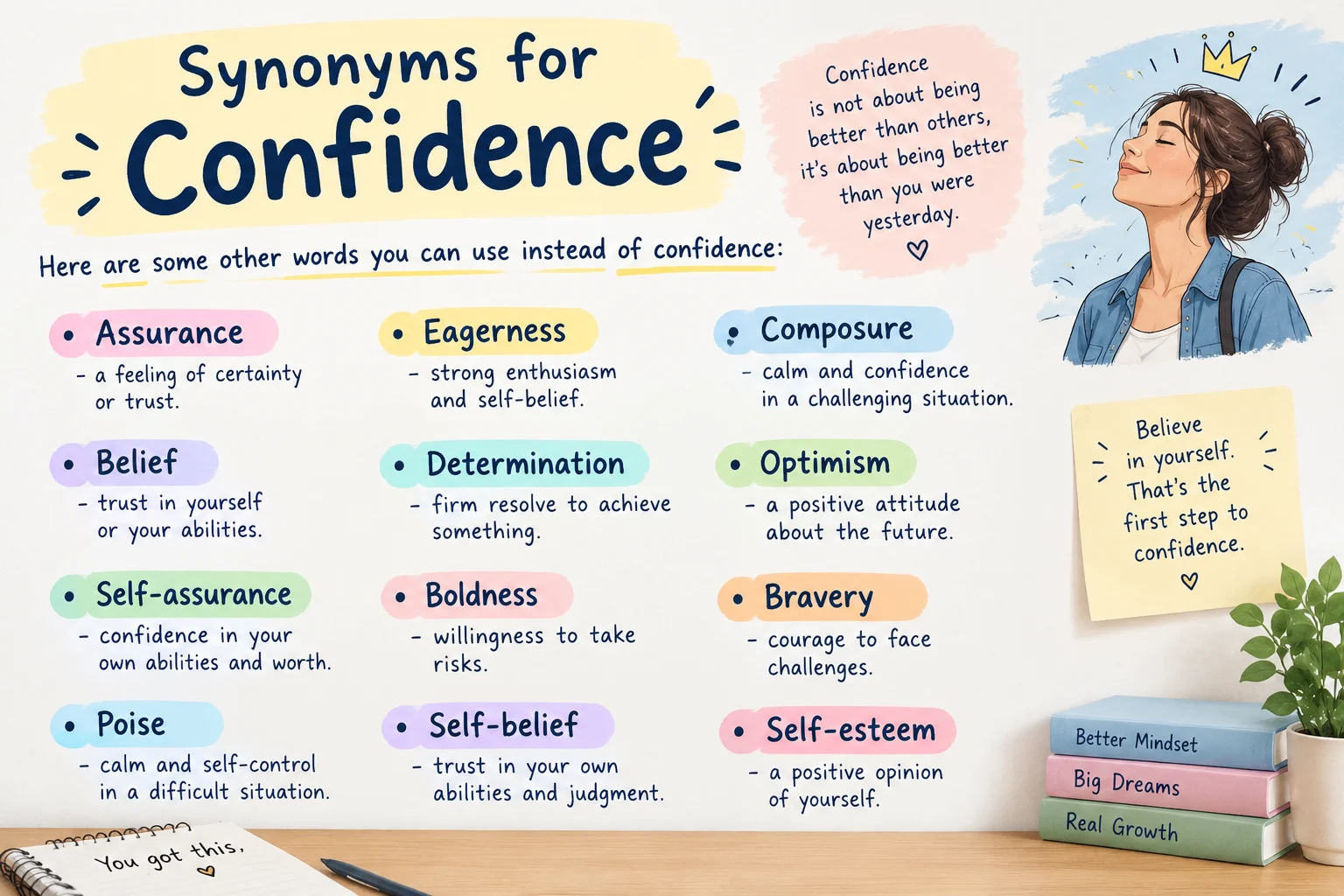
The right synonym for confidence can make your writing sound more precise, natural, and expressive. Synonyms for confidence include self-assurance, self-belief, assurance, poise, composure, boldness, courage, conviction, and certainty, but these words do not all mean exactly the same thing.
Confidence usually means a strong belief in your own abilities, qualities, judgment, or ability to succeed. For example, a student may speak with confidence during a presentation, an athlete may trust their ability to perform, or a job applicant may answer questions with calm self-assurance. Self-belief focuses on trusting your own abilities, poise emphasizes calm confidence under pressure, and boldness suggests a willingness to act without hesitation.
Certainty is different because it usually means being sure that something is true or will happen, rather than believing in yourself. If you’re searching for synonyms for confidence for essays, schoolwork, professional writing, speeches, stories, or everyday English, this guide explains useful alternatives, their meanings, subtle differences, and when each one fits best.
Self-Assurance
Meaning: Self-assurance means feeling sure about yourself and your abilities.
Examples:
- Her self-assurance grew after weeks of practice.
- He answered the question with quiet self-assurance.
Self-Confidence
Meaning: Self-confidence means believing that you can do things well.
Examples:
- The presentation helped build her self-confidence.
- His self-confidence was clear when he entered the room.
Assurance
Meaning: Assurance means a strong feeling that you can trust yourself or that something is certain.
Examples:
- She spoke with assurance during the interview.
- His assurance made the team feel calm.
Self-Belief
Meaning: Self-belief means trusting your own skills and judgment.
Examples:
- Her self-belief helped her try again.
- Strong self-belief can help you face new challenges.
Self-Possession
Meaning: Self-possession means staying calm and in control while feeling sure of yourself.
Examples:
- She showed great self-possession during the debate.
- His self-possession impressed everyone at the meeting.
Self-Reliance
Meaning: Self-reliance means trusting yourself to handle things without always needing help.
Examples:
- Living alone taught him self-reliance.
- Her self-reliance helped her make the decision.
Aplomb
Meaning: Aplomb means calm confidence, especially in a difficult situation.
Examples:
- She handled the sudden question with aplomb.
- He spoke with professional aplomb during the meeting.
Poise
Meaning: Poise means showing calm confidence and good control.
Examples:
- She answered every question with poise.
- His poise helped him stay calm on stage.
Composure
Meaning: Composure means staying calm and controlled when things become stressful.
Examples:
- She kept her composure during the argument.
- His composure helped the group stay focused.
Certainty
Meaning: Certainty means being completely sure that something is true or will happen.
Examples:
- She spoke with certainty about her answer.
- I cannot say with certainty what will happen.
Certitude
Meaning: Certitude means complete confidence that something is true.
Examples:
- He stated his opinion with certitude.
- She spoke with certitude about the results.
Sureness
Meaning: Sureness means a strong feeling that you are right or capable.
Examples:
- Her sureness made the answer sound convincing.
- He spoke with sureness during the discussion.
Assuredness
Meaning: Assuredness means a calm and strong sense of confidence.
Examples:
- His assuredness was clear from the way he spoke.
- She answered with quiet assuredness.
Conviction
Meaning: Conviction means a strong belief that something is true or right.
Examples:
- She defended her idea with conviction.
- He spoke with conviction during the debate.
Courage
Meaning: Courage means being willing to face fear or difficulty.
Examples:
- It took courage to speak in front of everyone.
- She showed courage when she asked for help.
Boldness
Meaning: Boldness means being willing to act or speak without much fear.
Examples:
- His boldness helped him share a new idea.
- She showed boldness by taking the lead.
Nerve
Meaning: Nerve means the courage and confidence needed to do something difficult.
Examples:
- He had the nerve to ask an important question.
- She found the nerve to walk onto the stage.
Daring
Meaning: Daring means being confident enough to take a risk.
Examples:
- Her daring choice changed the whole plan.
- He made a daring move during the game.
Audacity
Meaning: Audacity means bold confidence that can sometimes seem shocking or rude.
Examples:
- She had the audacity to question the old rule.
- His audacity surprised everyone at the meeting.
Fearlessness
Meaning: Fearlessness means showing very little fear when facing a challenge.
Examples:
- Her fearlessness helped the team move forward.
- He faced the difficult task with fearlessness.
Intrepidity
Meaning: Intrepidity means great courage when facing danger or difficulty.
Examples:
- The climber showed remarkable intrepidity.
- Her intrepidity helped her face the dangerous journey.
Mettle
Meaning: Mettle means strength and courage shown during a difficult test.
Examples:
- The final challenge tested his mettle.
- She showed her mettle when the plan failed.
Spirit
Meaning: Spirit means courage, energy, and determination to keep going.
Examples:
- Her strong spirit lifted the whole team.
- He kept his spirit even after the setback.
Spunk
Meaning: Spunk means lively courage and confidence, often in an informal way.
Examples:
- The young player showed plenty of spunk.
- Her spunk helped her speak up for herself.
Pluck
Meaning: Pluck means brave confidence when facing something hard.
Examples:
- It took real pluck to perform alone.
- She showed plenty of pluck during the challenge.
Guts
Meaning: Guts means the courage to do something difficult or risky.
Examples:
- He had the guts to tell the truth.
- She showed guts when everyone else stayed quiet.
Assertiveness
Meaning: Assertiveness means expressing your opinions or needs clearly and confidently.
Examples:
- Her assertiveness helped her set a clear boundary.
- You can show assertiveness without being rude.
Firmness
Meaning: Firmness means showing strong and steady confidence in a decision.
Examples:
- She answered with firmness when they questioned her choice.
- His firmness helped end the argument.
Security
Meaning: Security means a feeling of safety and confidence in yourself or your situation.
Examples:
- The new job gave him a sense of security.
- Her security grew as she learned the skill.
Self-Respect
Meaning: Self-respect means valuing yourself and knowing that you deserve fair treatment.
Examples:
- Self-respect helped her say no to the unfair offer.
- He spoke calmly because he had strong self-respect.
Synonyms of Neurodivergent: Terms, Meanings & Key Differences
Faith
Meaning: Faith means strong trust or belief in someone, something, or yourself.
Examples:
- She kept faith in her own abilities.
- His faith in the team never disappeared.
Trust
Meaning: Trust means believing that someone or something is reliable or worthy of confidence.
Examples:
- I have complete trust in my coach.
- Her trust in herself grew with practice.
Belief
Meaning: Belief means accepting something as true or trusting that it is possible.
Examples:
- His belief in himself kept him moving forward.
- She has a strong belief in her idea.
Reliance
Meaning: Reliance means depending on someone or something because you trust it.
Examples:
- Her reliance on her own skills grew over time.
- The team’s reliance on him showed how much they trusted him.
Credence
Meaning: Credence means belief that something is true or trustworthy.
Examples:
- Her clear evidence gave credence to the idea.
- His calm explanation gave the story more credence.
Positiveness
Meaning: Positiveness means a strong and definite way of showing that you believe something.
Examples:
- She answered with positiveness during the discussion.
- His positiveness made his decision clear.
Calmness
Meaning: Calmness means staying peaceful and controlled instead of becoming nervous.
Examples:
- Her calmness helped everyone relax.
- He answered the difficult question with calmness.
Coolness
Meaning: Coolness means staying calm and confident when others may feel nervous.
Examples:
- His coolness impressed the entire team.
- She handled the pressure with coolness.
Equanimity
Meaning: Equanimity means staying calm and balanced when facing problems.
Examples:
- She handled the criticism with equanimity.
- His equanimity helped him make a clear choice.
Sang-Froid
Meaning: Sang-froid means staying very calm and confident in a stressful situation.
Examples:
- She showed remarkable sang-froid during the emergency.
- His sang-froid helped him answer without panic.
Presence of Mind
Meaning: Presence of mind means staying calm enough to think clearly in a difficult moment.
Examples:
- Her presence of mind helped her solve the problem.
- He had the presence of mind to ask for help.
Level-Headedness
Meaning: Level-headedness means staying calm and thinking clearly instead of panicking.
Examples:
- Her level-headedness helped the team choose wisely.
- His level-headedness was useful during the crisis.
Balance
Meaning: Balance means keeping control of your feelings and actions while staying calm.
Examples:
- She kept her balance during the heated discussion.
- Emotional balance helped him speak clearly.
Stability
Meaning: Stability means having a steady and secure feeling instead of being easily shaken.
Examples:
- The new routine gave her more emotional stability.
- His stability helped others feel safe.
Savoir-Faire
Meaning: Savoir-faire means having the skill and confidence to handle social situations well.
Examples:
- She handled the formal dinner with great savoir-faire.
- His savoir-faire made difficult conversations easier.
Dignity
Meaning: Dignity means behaving with self-respect and calm confidence.
Examples:
- She accepted the criticism with dignity.
- He walked away with dignity after the disagreement.
Self-Esteem
Meaning: Self-esteem means the value and respect you feel for yourself.
Examples:
- Positive feedback helped improve her self-esteem.
- Learning a new skill gave him more self-esteem.
High Morale
Meaning: High morale means feeling confident, positive, and ready to keep working toward a goal.
Examples:
- The team’s high morale helped them finish the project.
- Good feedback kept everyone’s morale high.
Resolve
Meaning: Resolve means a firm decision to do something despite difficulty.
Examples:
- She showed strong resolve after the first failure.
- His resolve helped him complete the difficult task.
Synonyms for Lonely: 50 +Words for Every Shade of Loneliness
FAQ
What is a good synonym for confidence?
Self-assurance is one of the closest synonyms for confidence when you mean belief in your own abilities. Other useful choices include self-confidence, assurance, self-belief, poise, and self-possession.
What is a simple word for confidence?
Self-belief is a simple and clear alternative to confidence. It means trusting your own abilities and judgment.
What is another word for confidence in yourself?
Self-confidence and self-assurance are strong choices when you mean belief in yourself and your abilities. Self-belief is another simple option.
What is a synonym for confidence in speaking?
The best choice depends on the type of speaking confidence you mean. Assertiveness fits clear and firm communication, while poise fits calm confidence and nerve fits the courage to speak.
What is a synonym for confidence in your abilities?
Self-assurance, self-belief, self-confidence, and self-reliance can describe confidence in your abilities. They are not identical, so choose the word that matches the exact context.
Are confidence and courage the same?
No. Confidence is mainly belief in yourself or your ability, while courage is the willingness to face fear or difficulty. A person can have courage even when they do not feel confident.
Are confidence and arrogance the same?
No. Confidence means having a healthy belief in yourself or your abilities. Arrogance usually suggests an exaggerated belief that you are better or more important than others. The two words should not be used as exact substitutes.
Conclusion
Learning synonyms for confidence can make your writing, speaking, and everyday communication much stronger. The right word can show calmness, courage, certainty, self-belief, or boldness instead of giving every situation the same meaning. Students can use these words in essays, while bloggers and content writers can use them to avoid repetition. Practice them in emails, schoolwork, social posts, and daily conversations. Once you understand the small differences, your English will sound more natural, precise, and expressive.

I am Meer Hadi, a passionate language and content writer at SynonymLibrary.com. I focus on creating helpful word guides that make it easier for readers to choose the right words, understand meanings, and express their ideas more clearly. Through my work, I aim to support students, writers, and professionals in building stronger communication skills.







