Have you ever had a bad day where everything went wrong? Maybe the weather ruined your picnic. Or a test result was not what you hoped for. These are adverse situations. The word “adverse” means something works against you. It describes things that are harmful or unfavorable.
Synonyms for adverse are other words that carry the same meaning. They help you describe bad situations in different ways. If you are a student, these words improve your essays; if you are a blogger or content writer, they keep your work fresh and varied; if you use English daily, they help you explain problems clearly.
Meaning and Origin of “Adverse”
Meaning
Adverse means something that is harmful, unfavorable, or working against you. If conditions are adverse, they make things harder. If a reaction is adverse, it is bad or unwanted. It describes anything that blocks success or causes damage.
Origin
The word “adverse” comes from Latin. The Latin word was “adversus,” which means “turned against.” It entered English through Old French “avers” around the 1300s. The original idea was something facing you in opposition, like a strong wind blowing in your face.
Learning synonyms for adverse gives your vocabulary more depth. Let’s explore 50 useful words that mean adverse.
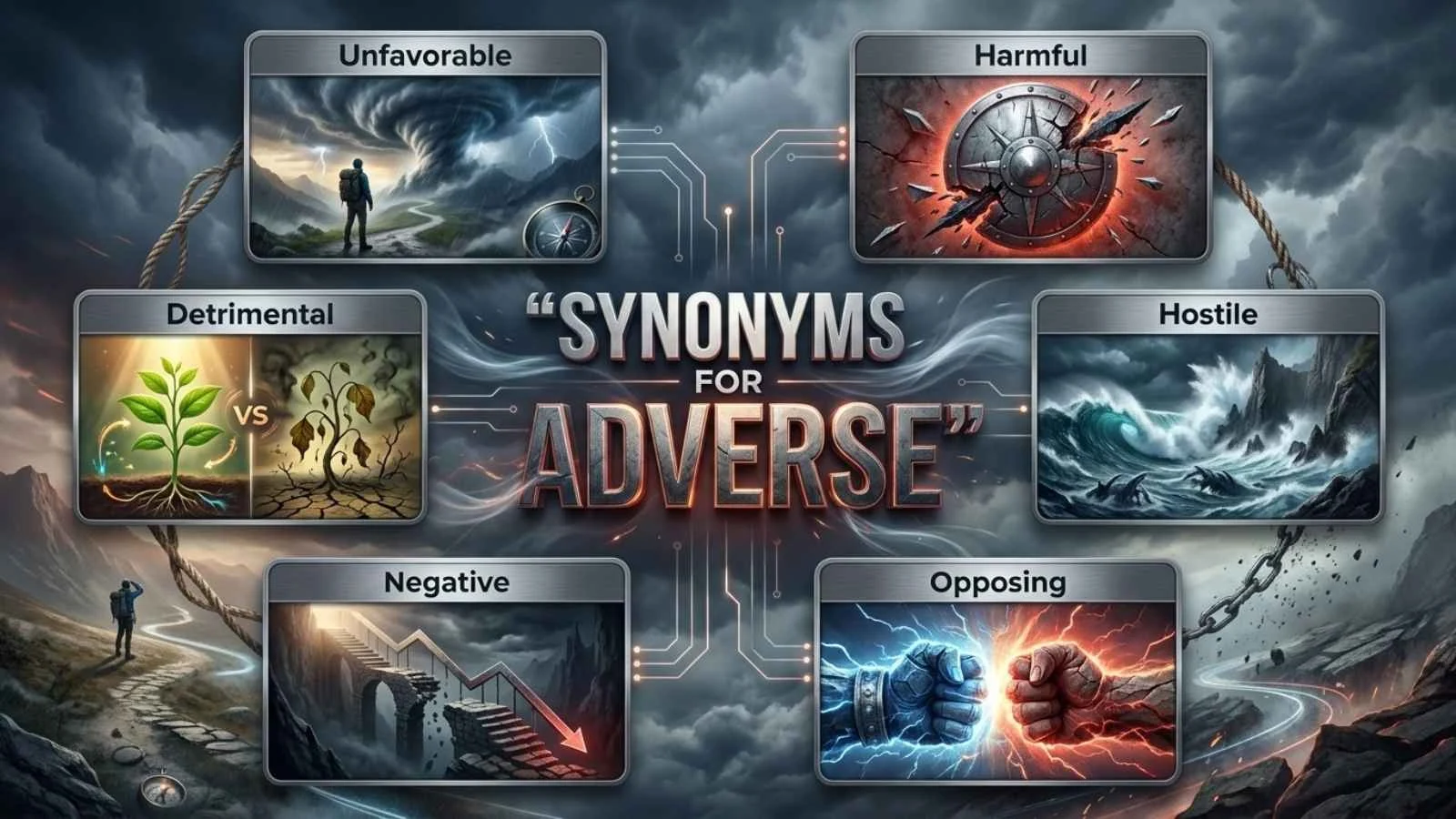
1. Unfavorable
Meaning:
Unfavorable means not good or not helpful for what you want to do.
Usage:
This word is used for conditions, opinions, or results that go against you. It is common in weather, reviews, and reports.
Examples:
- The unfavorable weather forced them to cancel the game.
- She received an unfavorable review from the critic.
2. Harmful
Meaning:
Harmful means causing damage or hurt to someone or something.
Usage:
This word is used when something actually causes injury or harm. It is direct and clear.
Examples:
- Smoking is harmful to your lungs.
- The harmful chemicals polluted the river.
3. Negative
Meaning:
Negative means bad, unwanted, or not positive.
Usage:
This word is used for effects, results, or attitudes that are not good. It is very common in everyday English.
Examples:
- The medicine had negative side effects.
- His negative attitude brought down the whole team.
4. Detrimental
Meaning:
Detrimental means causing harm or damage, especially over time.
Usage:
This word is used in formal writing. It describes things that slowly hurt or weaken something.
Examples:
- Too much sugar is detrimental to your health.
- The late nights were detrimental to her school grades.
5. Hostile
Meaning:
Hostile means unfriendly and against you, like an enemy.
Usage:
This word is used for people, environments, or actions that feel threatening and aggressive.
Examples:
- The hostile crowd booed the visiting team.
- They faced a hostile environment in the new workplace.
6. Damaging
Meaning:
Damaging means causing serious harm or destruction.
Usage:
This word is used when something breaks, hurts, or weakens another thing badly.
Examples:
- The damaging storm knocked down many trees.
- The damaging report ruined his reputation.
7. Destructive
Meaning:
Destructive means causing great damage or ruin.
Usage:
This word is used for things that destroy or break completely. It is stronger than “damaging.”
Examples:
- The destructive fire burned down three houses.
- His destructive habits hurt everyone around him.
8. Contrary
Meaning:
Contrary means opposite to what you want or expect.
Usage:
This word is used when something goes in the opposite direction of your plans or wishes.
Examples:
- The wind blew in a contrary direction.
- Contrary results surprised the researchers.
9. Opposing
Meaning:
Opposing means going against something or standing on the other side.
Usage:
This word is used for forces, views, or actions that fight against each other.
Examples:
- The opposing team played very hard.
- Opposing opinions made the discussion difficult.
10. Unfortunate
Meaning:
Unfortunate means unlucky or causing sadness and trouble.
Usage:
This word is used for bad events that happen due to bad luck or bad timing.
Examples:
- It was an unfortunate accident that no one expected.
- The unfortunate delay made them miss their flight.
11. Inimical
Meaning:
Inimical means harmful or hostile, like an enemy.
Usage:
This word is formal and used for things that work against success or well-being.
Examples:
- Pollution is inimical to human health.
- The harsh rules were inimical to creativity.
12. Hurtful
Meaning:
Hurtful means causing emotional or physical pain.
Usage:
This word is used when words or actions cause sadness or injury to someone.
Examples:
- His hurtful words made her cry.
- The hurtful rumor spread quickly through the school.
13. Disadvantageous
Meaning:
Disadvantageous means putting you in a worse position or causing a disadvantage.
Usage:
This word is used when conditions or situations make it harder for you to succeed.
Examples:
- The location was disadvantageous for the new store.
- Starting late was disadvantageous for the runner.
14. Threatening
Meaning:
Threatening means showing signs of danger or harm coming soon.
Usage:
This word is used when something looks like it could cause trouble or hurt.
Examples:
- The threatening clouds promised a big storm.
- His threatening tone scared the younger children.
15. Injurious
Meaning:
Injurious means causing injury or harm to health or well-being.
Usage:
This word is formal and used in medical or legal writing for things that cause damage.
Examples:
- The injurious fumes forced workers to leave the building.
- Excessive noise is injurious to hearing.
16. Unfriendly
Meaning:
Unfriendly means not kind, welcoming, or helpful.
Usage:
This word is used for people or situations that feel cold and against you.
Examples:
- The unfriendly climate made farming very hard.
- She received an unfriendly response from the manager.
17. Troublesome
Meaning:
Troublesome means causing difficulty, problems, or worry.
Usage:
This word is used for things that create ongoing problems or annoyance.
Examples:
- The troublesome leak damaged the ceiling.
- His troublesome behavior worried his parents.
18. Harmful
This synonym was already used. Let me replace it.
18. Noxious
Meaning:
Noxious means harmful or poisonous, especially to health.
Usage:
This word is used for gases, substances, or influences that are toxic and dangerous.
Examples:
- Noxious fumes filled the factory during the accident.
- The noxious weeds killed the plants around them.
19. Perilous
Meaning:
Perilous means full of danger and risk.
Usage:
This word is used when a situation is very dangerous and could lead to serious harm.
Examples:
- The perilous road was too icy to drive on.
- They made a perilous journey through the mountains.
20. Deleterious
Meaning:
Deleterious means causing harm or damage, often in a subtle way.
Usage:
This word is formal and used in science and health writing for things that slowly cause damage.
Examples:
- The deleterious effects of stress are well known.
- Air pollution has deleterious effects on children.
21. Inauspicious
Meaning:
Inauspicious means showing signs that something will not go well.
Usage:
This word is used for beginnings or situations that look like they will have bad results.
Examples:
- The project had an inauspicious start with many errors.
- Rain on the wedding day felt inauspicious.
22. Antagonistic
Meaning:
Antagonistic means acting against someone or showing open opposition.
Usage:
This word is used for people or forces that fight against or resist something.
Examples:
- His antagonistic attitude made teamwork impossible.
- The bacteria became antagonistic to the medicine.
23. Dire
Meaning:
Dire means extremely serious, urgent, or terrible.
Usage:
This word is used for situations that are very bad and need immediate attention.
Examples:
- The refugees were in dire need of food and water.
- The company faced dire financial problems.
24. Grim
Meaning:
Grim means very serious, dark, or unpleasant.
Usage:
This word is used for situations, news, or outlooks that feel harsh and hopeless.
Examples:
- The doctors gave a grim report about his health.
- The grim weather lasted for weeks.
25. Discouraging
Meaning:
Discouraging means making you feel less hopeful or confident.
Usage:
This word is used when something takes away your motivation or positive feelings.
Examples:
- The discouraging test results upset the students.
- The lack of progress was discouraging for the team.
26. Prohibitive
Meaning:
Prohibitive means so difficult or extreme that it prevents something from happening.
Usage:
This word is used for costs, rules, or conditions that block you from doing what you want.
Examples:
- The prohibitive cost of the house kept them from buying it.
- Prohibitive regulations stopped the small business from growing.
27. Harsh
Meaning:
Harsh means rough, severe, and unpleasant.
Usage:
This word is used for weather, criticism, or conditions that are hard to bear.
Examples:
- The harsh winter made life very difficult.
- His harsh words hurt her feelings deeply.
28. Ruinous
Meaning:
Ruinous means causing complete destruction or financial ruin.
Usage:
This word is used when something leads to total damage or collapse.
Examples:
- The ruinous flood destroyed the entire village.
- Their ruinous spending habits emptied their savings.
29. Toxic
Meaning:
Toxic means poisonous or very harmful to living things.
Usage:
This word is used for chemicals, relationships, or environments that cause serious harm.
Examples:
- The toxic waste was dumped illegally near the river.
- A toxic work environment affects everyone’s mental health.
30. Obstructive
Meaning:
Obstructive means blocking progress or making things harder to do.
Usage:
This word is used for people or things that get in the way and stop progress.
Examples:
- The obstructive rules slowed down the building process.
- His obstructive behavior delayed the meeting.
31. Counterproductive
Meaning:
Counterproductive means having the opposite effect of what you wanted.
Usage:
This word is used when an action makes a situation worse instead of better.
Examples:
- Yelling at children is often counterproductive.
- The new policy proved counterproductive and caused more problems.
32. Disastrous
Meaning:
Disastrous means causing great damage, failure, or suffering.
Usage:
This word is used for events or decisions that lead to terrible results.
Examples:
- The disastrous earthquake destroyed thousands of homes.
- His disastrous decision cost the company millions.
33. Malicious
Meaning:
Malicious means done on purpose to cause harm or pain.
Usage:
This word is used when someone intends to hurt others through their actions or words.
Examples:
- The malicious gossip spread lies about her.
- A malicious email tried to steal personal information.
34. Calamitous
Meaning:
Calamitous means causing great disaster and suffering.
Usage:
This word is formal and used for events that bring widespread destruction.
Examples:
- The calamitous earthquake left thousands homeless.
- A calamitous drought killed all the crops.
35. Oppressive
Meaning:
Oppressive means weighing heavily on people in a cruel or unfair way.
Usage:
This word is used for heat, rules, or systems that feel crushing and unbearable.
Examples:
- The oppressive heat made it impossible to work outside.
- The oppressive laws took away people’s freedom.
36. Pernicious
Meaning:
Pernicious means causing harm in a gradual, hidden way.
Usage:
This word is formal and used for things that slowly destroy without being noticed at first.
Examples:
- The pernicious influence of bad friends changed his behavior.
- Pernicious rumors can destroy a person’s reputation over time.
37. Prejudicial
Meaning:
Prejudicial means harmful to someone’s rights, chances, or interests.
Usage:
This word is used in legal and formal writing for things that unfairly damage someone.
Examples:
- The leaked information was prejudicial to the defendant.
- The early decision was prejudicial to the other candidates.
38. Untoward
Meaning:
Untoward means unexpected and causing problems or difficulty.
Usage:
This word is used for unfortunate events that happen when you do not expect them.
Examples:
- Nothing untoward happened during the flight.
- An untoward incident disrupted the ceremony.
39. Ominous
Meaning:
Ominous means giving a sign that something bad is going to happen.
Usage:
This word is used for warnings, feelings, or signs that suggest danger ahead.
Examples:
- The ominous dark sky warned of a coming storm.
- There was an ominous silence before the bad news came.
40. Catastrophic
Meaning:
Catastrophic means causing sudden, great damage or suffering.
Usage:
This word is used for the worst possible outcomes or disasters.
Examples:
- The catastrophic hurricane destroyed the coastal town.
- A catastrophic failure shut down the entire system.
41. Bleak
Meaning:
Bleak means without hope, warmth, or encouragement.
Usage:
This word is used for futures, weather, or situations that look very dark and empty.
Examples:
- The job market looked bleak for new graduates.
- The bleak landscape had no trees or color.
42. Unwelcome
Meaning:
Unwelcome means not wanted or not received with pleasure.
Usage:
This word is used for news, guests, or changes that nobody is happy about.
Examples:
- The unwelcome news shocked the entire family.
- Rain was an unwelcome surprise at the outdoor wedding.
43. Malignant
Meaning:
Malignant means very harmful and likely to get worse.
Usage:
This word is used in medical contexts for diseases and in general for evil or dangerous influences.
Examples:
- The doctor found a malignant tumor that needed treatment.
- His malignant influence corrupted the whole group.
44. Unpropitious
Meaning:
Unpropitious means not likely to lead to success or good results.
Usage:
This word is formal and used when timing or conditions are not right for something.
Examples:
- They chose an unpropitious time to start the business.
- The unpropitious weather delayed the harvest.
45. Inhibiting
Meaning:
Inhibiting means holding back or preventing something from growing or happening.
Usage:
This word is used when something stops natural progress or development.
Examples:
- The cold climate was inhibiting plant growth.
- Fear can be inhibiting when you try something new.
46. Hindering
Meaning:
Hindering means making it harder for someone or something to move forward.
Usage:
This word is used when obstacles or problems slow down progress.
Examples:
- The heavy traffic was hindering their journey.
- Poor communication was hindering the project’s success.
47. Crippling
Meaning:
Crippling means so severe that it stops normal function or progress.
Usage:
This word is used for debt, pain, or problems that are so bad you cannot continue.
Examples:
- Crippling debt forced them to sell their home.
- The crippling snowstorm shut down the entire city.
48. Corrosive
Meaning:
Corrosive means slowly destroying or weakening something over time.
Usage:
This word is used for chemicals that eat away at materials, or for harmful behaviors and attitudes.
Examples:
- The corrosive acid damaged the metal pipes.
- Jealousy can have a corrosive effect on friendships.
49. Debilitating
Meaning:
Debilitating means making someone or something very weak.
Usage:
This word is used for illnesses, fears, or problems that take away strength and ability.
Examples:
- She suffered from debilitating headaches every week.
- The debilitating heat made outdoor work impossible.
50. Baneful
Meaning:
Baneful means causing destruction or serious harm.
Usage:
This word is literary and formal. It describes evil or deeply harmful influences.
Examples:
- The baneful effects of war lasted for generations.
- His baneful presence brought trouble wherever he went.
FAQs
What is another word for adverse?
Some common synonyms for adverse include unfavorable, harmful, negative, detrimental, and hostile.
Can I use “negative” instead of “adverse”?
Yes! Negative is simpler and works well in everyday English. Adverse sounds more formal.
What is the difference between adverse and averse?
Adverse means harmful or unfavorable (describes situations). Averse means having a strong dislike for something (describes feelings).
Are synonyms for adverse useful in writing?
Yes! Using different words for adverse makes your writing stronger and avoids repeating the same word.
What is a strong synonym for adverse?
Words like catastrophic, disastrous, and devastating are very strong synonyms that show extreme harm.
Conclusion
Learning synonyms for adverse helps you describe difficult situations with more power and precision. Whether you are writing a school essay, a professional report, a blog post, or just explaining a problem to a friend, having more words makes your message clearer. Each synonym fits a different level of harm or negativity.
Practice using these words in your emails, homework, and daily conversations. The more you use them, the more natural they will sound. A strong vocabulary helps you communicate with confidence and clarity.

I am Meer Hadi, a passionate language and content writer at SynonymLibrary.com. I focus on creating helpful word guides that make it easier for readers to choose the right words, understand meanings, and express their ideas more clearly. Through my work, I aim to support students, writers, and professionals in building stronger communication skills.