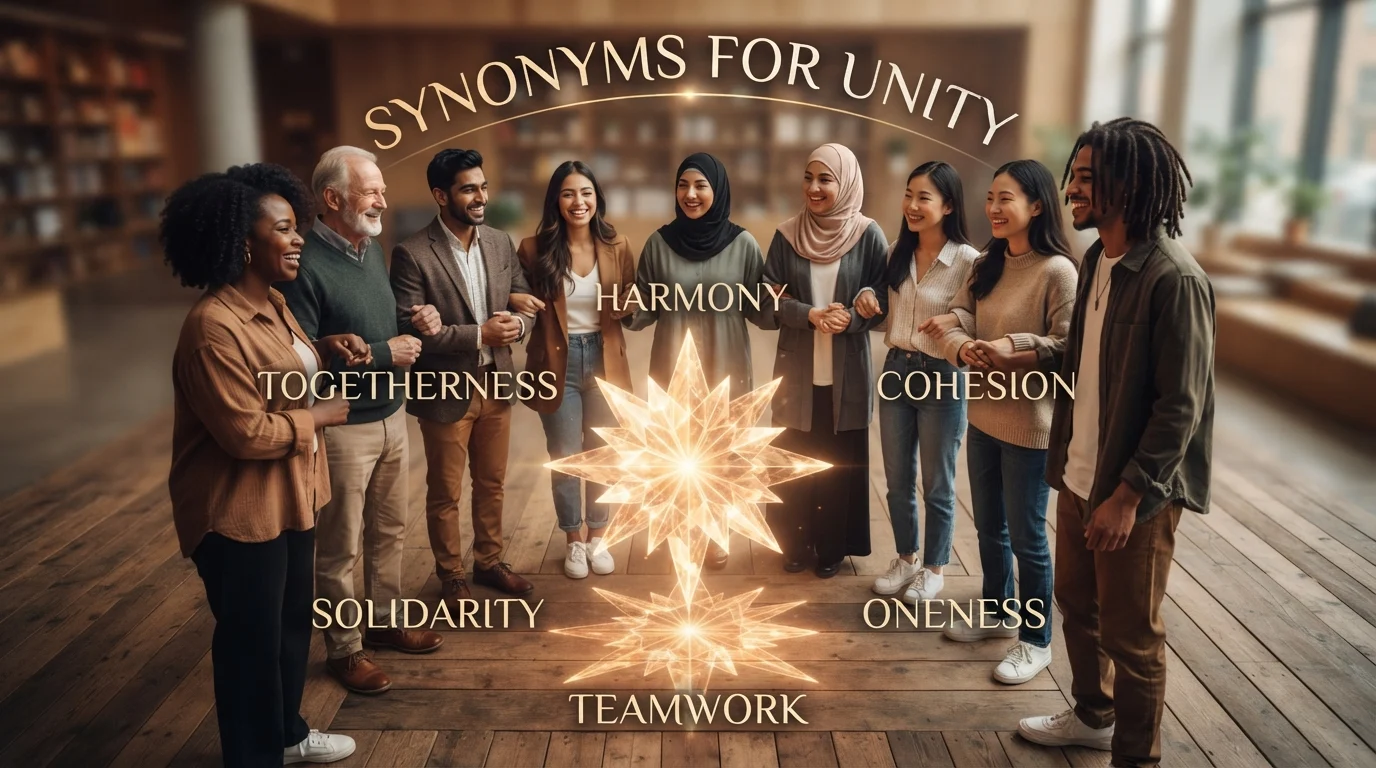
If you keep repeating “unity” in your writing, the right alternative can make your meaning clearer, stronger, and more specific. The best choice depends on what kind of unity you mean. Togetherness emphasizes people being connected, solidarity highlights shared support for a person, group, or cause, and harmony focuses on peaceful agreement. Cohesion describes how closely the members of a group hold together, while cooperation emphasizes working together toward a shared goal.
These alternatives are related, but they are not interchangeable in every sentence. A community may show solidarity during a difficult time, people may live in harmony despite their differences, or a team may develop strong cohesion around a common purpose. In formal contexts, consensus can describe shared agreement, while unification emphasizes the process of bringing separate groups or parts together.
This guide covers useful synonyms for unity, including everyday, formal, academic, social, and context-based alternatives, with simple meanings and examples to help you choose the right word.
Oneness
Meaning: Oneness means the state of being one instead of separate.
Examples:
- The ceremony created a feeling of oneness.
- She felt a deep sense of oneness with nature.
Togetherness
Meaning: Togetherness means being close, connected, and united with others.
Examples:
- Family dinners create a feeling of togetherness.
- The holiday brought everyone a sense of togetherness.
Harmony
Meaning: Harmony means people or things existing or working peacefully together.
Examples:
- The neighbors live together in harmony.
- The team worked in harmony to finish the project.
Solidarity
Meaning: Solidarity means standing together to support a person, group, or cause.
Examples:
- The workers showed solidarity during the difficult time.
- Her friends stood in solidarity with her.
Cohesion
Meaning: Cohesion means the strong bond that keeps a group together.
Examples:
- Trust helped improve team cohesion.
- Good communication can build group cohesion.
Union
Meaning: Union means the joining of separate people or things into one.
Examples:
- The union of the two groups made them stronger.
- Their union was based on a shared goal.
Unification
Meaning: Unification means bringing separate people or parts together as one.
Examples:
- The agreement supported the unification of the community.
- The leader worked for the unification of the divided groups.
Accord
Meaning: Accord means agreement or peaceful understanding between people or groups.
Examples:
- The two sides finally reached an accord.
- The leaders worked in accord with one another.
Concord
Meaning: Concord means a state of agreement, peace, or harmony.
Examples:
- The two communities lived in concord.
- The leaders hoped to restore concord between the groups.
Agreement
Meaning: Agreement means having the same opinion or accepting the same idea.
Examples:
- We reached an agreement after the meeting.
- Their agreement made the decision easier.
Consensus
Meaning: Consensus means general agreement among the members of a group.
Examples:
- The committee reached a consensus.
- Everyone discussed the plan before reaching a consensus.
Unanimity
Meaning: Unanimity means complete agreement among everyone in a group.
Examples:
- The proposal passed with unanimity.
- The judges reached unanimity after the discussion.
Unison
Meaning: Unison means doing, saying, or moving something together at the same time.
Examples:
- The students answered in unison.
- The dancers moved in perfect unison.
Concurrence
Meaning: Concurrence means agreement with an idea, decision, or opinion.
Examples:
- The board gave its concurrence to the plan.
- Her concurrence helped the team move forward.
Consent
Meaning: Consent means agreement or permission to do something.
Examples:
- The group gave its consent to the new plan.
- We cannot proceed without everyone’s consent.
Cooperation
Meaning: Cooperation means working together to achieve a shared result.
Examples:
- The project succeeded because of everyone’s cooperation.
- Cooperation between the teams solved the problem.
Collaboration
Meaning: Collaboration means working with others to create or achieve something.
Examples:
- The two writers worked in collaboration.
- Their collaboration produced a strong final project.
Teamwork
Meaning: Teamwork means working together toward a common goal.
Examples:
- Good teamwork helped us finish early.
- The coach praised the players for their teamwork.
Coordination
Meaning: Coordination means organizing people or actions so they work well together.
Examples:
- Good coordination kept the event running smoothly.
- The dancers needed careful coordination during the show.
Camaraderie
Meaning: Camaraderie means friendly trust and closeness among people in a group.
Examples:
- The players developed strong camaraderie.
- Years of practice created real camaraderie among the teammates.
Fellowship
Meaning: Fellowship means a friendly connection based on shared interests or experiences.
Examples:
- The club gives members a strong sense of fellowship.
- They enjoyed fellowship during the community event.
Brotherhood
Meaning: Brotherhood means a strong bond of friendship, loyalty, or shared purpose.
Examples:
- The players developed a strong sense of brotherhood.
- Their brotherhood helped them face the challenge.
Sisterhood
Meaning: Sisterhood means a close bond of friendship and support among women.
Examples:
- The group found strength through sisterhood.
- Their sisterhood grew stronger over the years.
Kinship
Meaning: Kinship means a close connection based on family, feelings, or shared interests.
Examples:
- The two artists felt a natural kinship.
- Their shared experience created a sense of kinship.
Companionship
Meaning: Companionship means the comfort and friendship that come from being with someone.
Examples:
- The travelers enjoyed each other’s companionship.
- Her friends gave her comfort and companionship.
Friendship
Meaning: Friendship is a close bond based on care, trust, and support.
Examples:
- Their friendship brought the group closer.
- Years of friendship created a lasting bond.
Affinity
Meaning: Affinity means a natural liking or connection between people or things.
Examples:
- The two artists have an affinity for simple designs.
- Their shared interests created an instant affinity.
Rapport
Meaning: Rapport means a friendly and comfortable relationship between people.
Examples:
- The teacher quickly built rapport with her students.
- Good rapport helped the two teams communicate.
Common Ground
Meaning: Common ground means shared ideas, interests, or beliefs between people.
Examples:
- We found common ground during the discussion.
- Their love of music gave them common ground.
Shared Purpose
Meaning: Shared purpose means having the same main reason or goal for acting.
Examples:
- A shared purpose brought the volunteers together.
- The team stayed focused because of its shared purpose.
Common Purpose
Meaning: Common purpose means a goal that several people want to achieve together.
Examples:
- The students worked together for a common purpose.
- A common purpose helped unite the community.
Shared Goal
Meaning: A shared goal is an aim that two or more people want to achieve together.
Examples:
- The players had one shared goal.
- Their shared goal kept everyone motivated.
Mutual Support
Meaning: Mutual support means people helping and encouraging each other.
Examples:
- Mutual support helped the students finish the project.
- Their mutual support made the team stronger.
Mutual Understanding
Meaning: Mutual understanding means people understand and respect each other’s views.
Examples:
- Honest talks can create mutual understanding.
- Mutual understanding helped the friends solve the problem.
Connectedness
Meaning: Connectedness means having a strong feeling of being linked to others.
Examples:
- The festival created a sense of connectedness.
- Shared activities can increase our feeling of connectedness.
Community
Meaning: Community means a group of people connected by a place, interest, or purpose.
Examples:
- The community came together to help the family.
- Our online community shares useful ideas.
Integration
Meaning: Integration means bringing different people or parts together into one whole.
Examples:
- The program supports the integration of new students.
- Integration helped the different groups work together.
Consolidation
Meaning: Consolidation means combining separate parts into a stronger whole.
Examples:
- The consolidation of the teams reduced confusion.
- The company began consolidation after the merger.
Coalition
Meaning: A coalition is a group of people or organizations that join for a shared purpose.
Examples:
- Several groups formed a coalition to help the community.
- The coalition worked together on the project.
Alliance
Meaning: An alliance is a relationship in which groups join to support a shared aim.
Examples:
- The two clubs formed an alliance.
- Their alliance helped them reach their goal.
Partnership
Meaning: Partnership means two or more people or groups working together.
Examples:
- Their partnership made the project stronger.
- The school formed a partnership with a local group.
Synonyms for Ugly: 57+ Words for Every Shade of Meaning
Like-Mindedness
Meaning: Like-mindedness means having similar ideas, interests, or goals.
Examples:
- Their like-mindedness made teamwork easy.
- The group was built around like-mindedness and shared interests.
Team Spirit
Meaning: Team spirit means the feeling of loyalty, energy, and support shared by team members.
Examples:
- The coach worked hard to build team spirit.
- Their strong team spirit kept them positive.
Esprit de Corps
Meaning: Esprit de corps means a strong feeling of pride, loyalty, and friendship within a group.
Examples:
- The coach worked to improve the team’s esprit de corps.
- Shared challenges created strong esprit de corps among the workers.
Wholeness
Meaning: Wholeness means the state of being complete and undivided.
Examples:
- The design gives the room a feeling of wholeness.
- She described the experience as a return to wholeness.
Singleness
Meaning: Singleness means the state of being one rather than divided.
Examples:
- The speech called for singleness of purpose.
- The group showed singleness in its main goal.
Indivisibility
Meaning: Indivisibility means the quality of being unable or unwilling to be divided.
Examples:
- The constitution stressed the indivisibility of the nation.
- Their message focused on the indivisibility of the community.
Integrity
Meaning: Integrity can mean the quality of remaining whole and undivided.
Examples:
- The design keeps the integrity of the original idea.
- The project preserved the integrity of the complete system.
Consonance
Meaning: Consonance means agreement or harmony between ideas, actions, or parts.
Examples:
- Their actions were in consonance with their values.
- The two plans were in consonance with each other.
Concert
Meaning: Concert can mean agreement or combined action toward the same purpose.
Examples:
- The groups acted in concert to solve the problem.
- The leaders worked in concert during the crisis.
Concordance
Meaning: Concordance means agreement or harmony between people, ideas, or things.
Examples:
- There was clear concordance between their goals.
- The reports showed concordance on the main issue.
Communion
Meaning: Communion means a close sharing of thoughts, feelings, or experiences.
Examples:
- The quiet walk created a sense of communion.
- Music gave the audience a feeling of communion.
What Are Synonyms for Unity?
Synonyms for unity are words that express the idea of being together, joined, connected, or in agreement.
Some of the strongest choices are:
- Oneness — being one.
- Togetherness — being close and connected.
- Harmony — peaceful agreement.
- Solidarity — standing together in support.
- Cohesion — the bond that keeps a group together.
- Union — joining separate parts.
- Cooperation — working together.
- Consensus — general agreement.
The best choice depends on the sentence. Not every related word can replace unity in every situation.
What Is a Good Word for Togetherness?
Togetherness is itself one of the clearest words for unity.
Other good choices include oneness, harmony, fellowship, camaraderie, connectedness, kinship, and solidarity.
For a warm and emotional tone, use togetherness or fellowship. For a group that supports a cause, solidarity is stronger. For a formal context, cohesion may fit better.
What Are 5 Good Synonyms for Unity?
Five strong and useful choices are:
- Togetherness — being close and connected.
- Harmony — living or working peacefully together.
- Solidarity — standing together in support.
- Cohesion — staying strongly connected as a group.
- Oneness — being or feeling like one.
These five cover several common meanings of unity without forcing one word into every situation.
What Words Are Similar to Unity?
Words similar to unity include oneness, togetherness, harmony, solidarity, cohesion, union, unification, accord, concord, cooperation, teamwork, consensus, unanimity, fellowship, camaraderie, and connectedness.
Some are direct alternatives, while others are better for a specific context. For example, teamwork is about working together, while consensus is about reaching agreement.
What Is a Beautiful Word for Unity?
Oneness is a beautiful word for unity because it suggests a deep feeling of being one.
Harmony is another strong choice because it suggests peaceful connection. Togetherness, fellowship, and communion can also work well in emotional or creative writing.
What Is Another Word for Unity in an Essay?
For an essay, choose a word based on your exact meaning.
- Use cohesion for a strong connection within a group.
- Use solidarity for people supporting a cause.
- Use harmony for peaceful relationships.
- Use consensus for general agreement.
- Use unification for bringing separate groups together.
- Use common purpose for a shared goal.
For example, “social cohesion” is usually more precise than simply replacing every use of “social unity” with “harmony.”
What Is a Latin Word for Unity?
The Latin word unitas means “unity” or “oneness.” It comes from the Latin word unus, meaning “one.”
This is useful when discussing word origins, classical language, history, or etymology. In normal English writing, however, words such as unity, oneness, union, and togetherness are more natural.
What Is an Ancient Word for Unity?
One historical term connected with becoming one is henosis, a Greek word associated with union or oneness.
For normal English, however, it is better to use a familiar word such as oneness, union, harmony, or unity unless your writing specifically discusses philosophy, ancient language, or history.
What Is Another Word for Unity Starting With O?
The clearest answer is oneness.
Oneness means the state of being one or deeply connected. It works especially well in philosophical, spiritual, emotional, and reflective writing.
Example:
“The poem celebrates the oneness of humanity.”
What Is a Synonym for Unity in Diversity?
For unity in diversity, useful alternatives include harmony, cohesion, solidarity, integration, inclusion, coexistence, and togetherness.
The important idea is that people can remain different while still being connected. Unity does not always mean that everyone must be identical.
For example, a multicultural community can show unity while its members keep different languages, traditions, and customs.
Is “Unity Is Strength” the Same as a Synonym?
No. Strength is not a direct synonym for unity.
The phrase “unity is strength” means that people can become stronger when they stand together. Here, strength describes a benefit or result of unity, not another word for it.
Better direct synonyms include solidarity, togetherness, cohesion, union, and harmony.
What Are 3 Synonyms for Unity?
If you need only three, choose:
Togetherness, harmony, and solidarity.
They cover three useful shades of meaning:
- Togetherness — being close and connected.
- Harmony — peaceful relationships.
- Solidarity — standing together in support.
What Is the Difference Between Unity and Oneness?
Unity usually describes people, groups, ideas, or parts coming together or acting as one.
Oneness often expresses a deeper sense of being one connected whole.
For example:
- “The team showed unity during the competition.”
- “The meditation created a feeling of oneness.”
Both words are close, but oneness can sound more emotional, philosophical, or spiritual.
Synonyms for Something: 52+ Words From Thing to Matter & More
What Is the Difference Between Unity and Harmony?
Unity means being joined or acting as one.
Harmony means existing or working together peacefully.
A group can have unity because everyone supports the same goal, even if members have different personalities or opinions. Harmony places more focus on peaceful relationships.
What Is the Difference Between Unity and Solidarity?
Unity is a broad idea of being together.
Solidarity is stronger when people stand together because they share an interest, goal, problem, or cause.
For example, a family may show unity at home, while workers may show solidarity when supporting each other at work.
What Is the Difference Between Unity and Cohesion?
Unity describes a state of being united.
Cohesion focuses on the strength of the bond that keeps a group together.
For example:
- “The team showed unity.”
- “Trust improved team cohesion.”
Both are useful, but cohesion often sounds more formal and analytical.
What Is the Difference Between Unity and Consensus?
Unity is broader than consensus.
Consensus means that members of a group reach general agreement about an idea, decision, or plan.
A group may have unity even when its members disagree about some details, as long as they remain connected by a shared purpose.
What Is the Difference Between Unity and Unanimity?
Unanimity means everyone agrees.
Unity does not always require complete agreement.
For example, a team can remain united around its main goal even when players have different opinions about how to achieve it.
What Is the Difference Between Unity and Uniformity?
Uniformity means being the same or having little variation.
Unity means being connected or joined.
This difference matters when discussing unity in diversity. People can have different cultures, opinions, or backgrounds and still have unity.
Unity Antonyms
The opposite of unity depends on the context.
Common antonyms include:
- Division — being separated into different groups.
- Disunity — lack of unity.
- Separation — being kept apart.
- Discord — disagreement or conflict.
- Dissension — disagreement within a group.
- Disagreement — having different opinions.
- Disunion — a state of being divided.
- Conflict — serious disagreement or struggle.
- Fragmentation — breaking into separate parts.
- Opposition — being against someone or something.
For a simple opposite, disunity or division is usually the clearest choice.
Best Synonyms for Unity in an Essay
For academic or formal writing, these choices are especially useful:
| Meaning | Best choice |
|---|---|
| People staying connected | Cohesion |
| People supporting a cause | Solidarity |
| Peaceful relationships | Harmony |
| General agreement | Consensus |
| Complete agreement | Unanimity |
| Joining separate groups | Unification |
| Joining into one | Union |
| Shared goal | Common purpose |
| Working together | Cooperation |
| Strong team bond | Camaraderie |
This approach is better than replacing unity with a random synonym because each word carries a slightly different meaning.
Synonyms for Team Unity
When you mean team unity, the most natural alternatives are:
- Teamwork
- Team spirit
- Cohesion
- Camaraderie
- Cooperation
- Collaboration
- Solidarity
- Shared purpose
- Common goal
- Esprit de corps
For example, “strong team cohesion” sounds more natural in a professional or sports context than forcing “harmony” into every sentence.
Synonyms for Unity and Oneness
If your focus is unity and oneness, the strongest choices are:
- Oneness
- Wholeness
- Togetherness
- Union
- Unification
- Singleness
- Indivisibility
- Connectedness
These words are especially useful when writing about identity, spirituality, philosophy, emotional connection, or the idea of becoming one whole.
How to Choose the Right Synonym for Unity
Do not choose a synonym just because it appears in a thesaurus. First ask what you mean.
If you mean being close: use togetherness.
If you mean peaceful relationships: use harmony.
If you mean support for a cause: use solidarity.
If you mean a strong group bond: use cohesion.
If you mean complete agreement: use unanimity.
If you mean general agreement: use consensus.
If you mean working together: use cooperation or teamwork.
If you mean joining separate parts: use union or unification.
If you mean a deep feeling of being one: use oneness.
This makes your writing more precise and prevents awkward synonym choices.
Common Mistakes When Using Synonyms for Unity
Using Every Synonym as an Exact Replacement
Not every related word has the same meaning. Consensus, for example, is about agreement, while togetherness is about closeness.
Confusing Unity With Uniformity
Unity does not mean everyone must be the same. People can stay united while having different cultures, opinions, or backgrounds.
Using Unanimity Too Broadly
Unanimity means complete agreement. Do not use it simply because people are working together.
Using Solidarity for Every Group
Solidarity usually suggests shared support, interests, or commitment. It is especially useful when people stand together for a reason.
Using Harmony When You Mean Joining
If two organizations become one, union or unification is usually clearer than harmony.
Choosing a Difficult Word Just to Sound Smart
A simple word is often better. In many sentences, togetherness or teamwork communicates the idea more clearly than a rare formal term.
Conclusion
Learning synonyms for unity gives you more ways to express togetherness, agreement, teamwork, support, and connection. The strongest word depends on what you really mean.
Use togetherness for closeness, harmony for peace, solidarity for shared support, cohesion for strong group bonds, consensus for general agreement, and oneness for a deeper sense of being one. Students can practice these words in essays, while bloggers and content writers can use them to avoid repetition. Try them in emails, schoolwork, and daily conversations to make your English clearer and more flexible.

I am Joseph Clark, a vocabulary and language content writer at SynonymLibrary.com. I create clear, practical synonym guides that help readers improve their writing, word choice, and communication skills. My goal is to make language learning simple, accurate, and useful for students, writers, professionals, and everyday learners.







