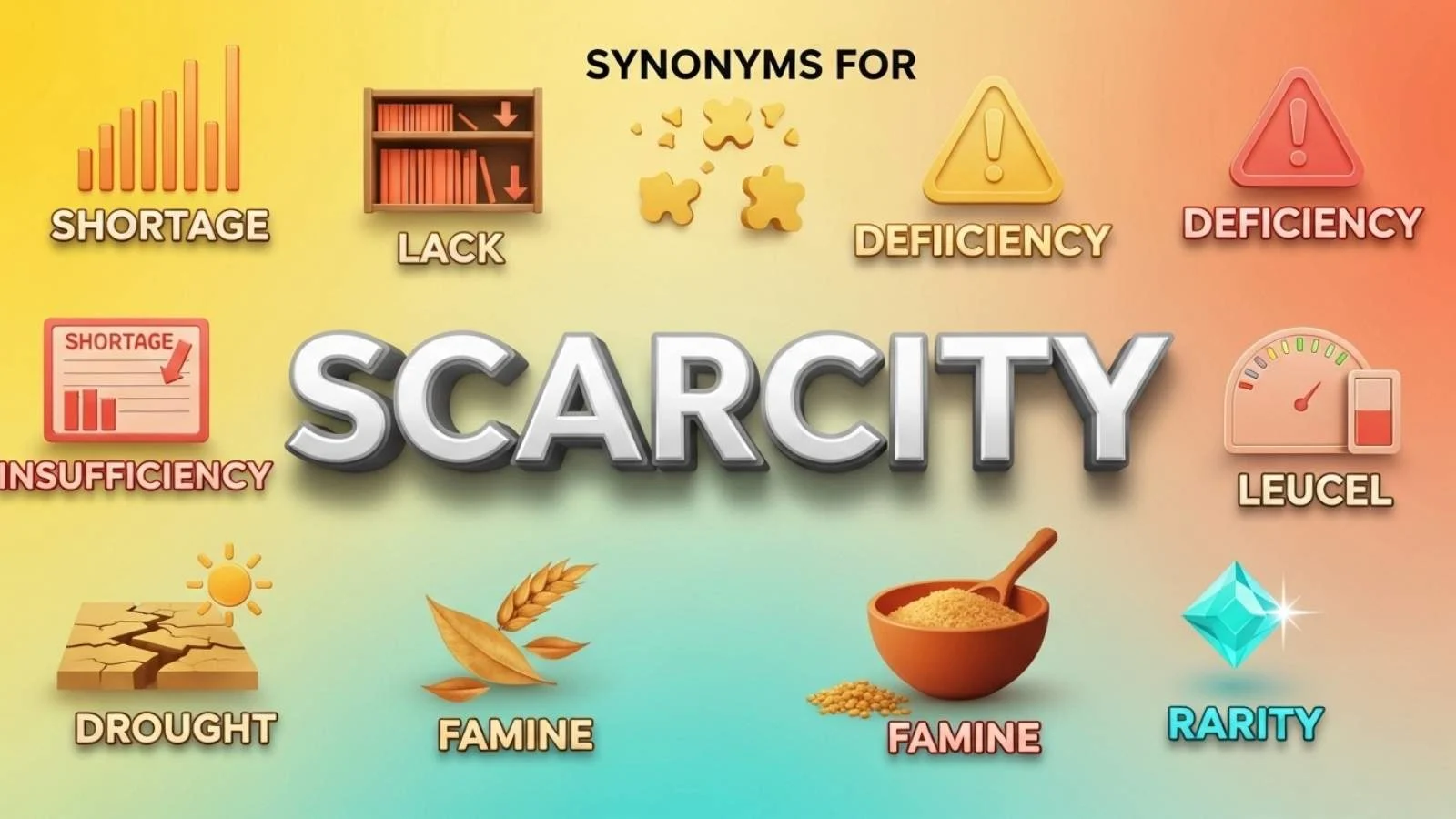
Have you ever tried to describe a time when something was not enough, but you kept using the word scarcity again and again? It happens a lot. In essays, blog posts, and daily writing, repeating the same word can make your sentences feel dull.
For example, you may write, “The town faced water scarcity,” and then want a different word for the next line. That is why learning synonyms for scarcity is so useful.
In simple English, scarcity means not having enough of something. It can mean too little food, water, money, time, or other things people need. It is useful for students, bloggers, content writers, and daily English users. When you know more synonyms for scarcity, your writing becomes clearer, smoother, and less repetitive. This guide will help you learn synonyms for scarcity in a simple and easy way.
Following is the list of synonyms for scarcity, which gives you 50 easy words to show big feelings in a simple way.
1. Shortage
Meaning:
This means there is less of something than people need.
Examples:
- The city faced a water shortage last summer.
- There is a shortage of clean fuel in the area.
2. Lack
Meaning:
This means not enough of something is there.
Examples:
- The plants died because of a lack of rain.
- There is a lack of food in some villages.
3. Deficiency
Meaning:
This means something important is missing or too low.
Examples:
- The report showed a deficiency in medical supplies.
- A deficiency in water hurt the crops.
4. Insufficiency
Meaning:
This means the amount is not enough.
Examples:
- The team struggled because of insufficiency of funds.
- Insufficiency of food became a real problem.
5. Dearth
Meaning:
This means there is very little of something.
Examples:
- There was a dearth of jobs in the small town.
- The region faced a dearth of fresh water.
6. Want
Meaning:
This means a state of not having enough to live well.
Examples:
- Many families lived in want during that time.
- The story shows a life of want and struggle.
7. Need
Meaning:
This means a strong lack of something important.
Examples:
- The storm left many people in need.
- There was great need for food and shelter.
8. Paucity
Meaning:
This means a very small amount of something.
Examples:
- The school faced a paucity of books.
- There was a paucity of facts in the report.
9. Limited supply
Meaning:
This means only a small amount is available.
Examples:
- The store had a limited supply of milk.
- Water was in limited supply after the heat wave.
10. Low supply
Meaning:
This means the amount available is small.
Examples:
- The village had a low supply of medicine.
- Low supply pushed prices higher.
11. Small amount
Meaning:
This means only a little of something is there.
Examples:
- Only a small amount of rice was left.
- The tank held a small amount of water.
12. Meagerness
Meaning:
This means there is very little of something.
Examples:
- The meagerness of the meal made them sad.
- He wrote about the meagerness of village life.
13. Sparseness
Meaning:
This means things are spread out and few in number.
Examples:
- The sparseness of trees was easy to see.
- There was a sparseness of houses in the area.
14. Rareness
Meaning:
This means something is not common and not easy to find.
Examples:
- The rareness of clean water worried the town.
- Its rareness made it more valuable.
15. Thin supply
Meaning:
This means there is only a little amount left.
Examples:
- The camp survived on a thin supply of food.
- We had a thin supply of paper in the office.
16. Inadequacy
Meaning:
This means something is not enough for the need.
Examples:
- The inadequacy of funds slowed the project.
- They spoke about the inadequacy of local resources.
17. Shortfall
Meaning:
This means the amount is less than what is needed.
Examples:
- The budget shortfall hurt the school badly.
- There was a shortfall in food supplies.
18. Undersupply
Meaning:
This means less is provided than needed.
Examples:
- The market faced undersupply during the strike.
- Undersupply caused delays and stress.
19. Understock
Meaning:
This means not enough goods are kept in stock.
Examples:
- The shop had an understock of basic items.
- Understock became a problem before winter.
20. Rare supply
Meaning:
This means something is hard to find because there is little of it.
Examples:
- Fresh fruit was in rare supply that month.
- Clean fuel stayed in rare supply for weeks.
21. Hunger
Meaning:
This means not enough food to eat.
Examples:
- The drought brought hunger to many homes.
- The charity worked to reduce hunger.
22. Famine
Meaning:
This means a very serious shortage of food.
Examples:
- The old stories speak of famine and loss.
- Many people left the area during the famine.
23. Drought
Meaning:
This means a long time with little or no rain.
Examples:
- The drought dried up the river.
- Farmers feared another year of drought.
24. Poverty
Meaning:
This means having very little money or resources.
Examples:
- Poverty forced the family to move.
- The town struggled with deep poverty.
25. Hardship
Meaning:
This means a hard time caused by not having enough.
Examples:
- The flood brought hardship to the village.
- They lived through years of hardship.
26. Want of resources
Meaning:
This means not having enough useful things.
Examples:
- The school suffered from want of resources.
- Want of resources slowed the work.
27. Supply problem
Meaning:
This means there is trouble getting enough of something.
Examples:
- The town faced a supply problem after the storm.
- A supply problem left the shelves empty.
28. Scarce supply
Meaning:
This means the available amount is very low.
Examples:
- Medicine was in scarce supply that winter.
- The village had a scarce supply of grain.
29. Low stock
Meaning:
This means only a little stock is left.
Examples:
- The shop warned customers about low stock.
- Low stock made people buy less.
30. Fewness
Meaning:
This means there are only a small number of things.
Examples:
- The fewness of buses made travel hard.
- We noticed the fewness of workers that day.
31. Emptiness
Meaning:
This means there is little or nothing there.
Examples:
- The emptiness of the shelves was shocking.
- She noticed the emptiness of the water tank.
32. Absence
Meaning:
This means something needed is not there at all.
Examples:
- The absence of rain hurt the farms.
- There was an absence of clean drinking water.
33. Nonavailability
Meaning:
This means something is not available when needed.
Examples:
- The nonavailability of fuel caused delays.
- People worried about the nonavailability of medicine.
34. Restricted supply
Meaning:
This means only a small amount can be given out.
Examples:
- Sugar was sold in restricted supply.
- The shop had a restricted supply of flour.
35. Limited resources
Meaning:
This means there are not many useful things to use.
Examples:
- The team worked with limited resources.
- The village survived on limited resources.
36. Low availability
Meaning:
This means very little of something can be found.
Examples:
- Low availability raised the cost of food.
- The town faced low availability of fresh water.
37. Poor supply
Meaning:
This means the amount available is weak or too low.
Examples:
- Poor supply made the prices jump.
- The area suffered from poor supply of gas.
38. Resource shortage
Meaning:
This means there are not enough useful materials or support.
Examples:
- The hospital faced a resource shortage.
- Resource shortage made the work slower.
39. Supply gap
Meaning:
This means the available amount is less than the needed amount.
Examples:
- The report showed a supply gap in clean water.
- A supply gap hurt small businesses badly.
40. Deficit
Meaning:
This means there is less than what is required.
Examples:
- The city faced a water deficit last year.
- A budget deficit affected the program.
41. In short supply
Meaning:
This means there is not much of something available.
Examples:
- Fresh milk was in short supply that week.
- Workers were in short supply during the holiday.
42. Insufficient amount
Meaning:
This means the amount is too low for the need.
Examples:
- The aid was an insufficient amount for the town.
- An insufficient amount of rain fell this year.
43. Little quantity
Meaning:
This means only a small amount is there.
Examples:
- Only a little quantity of rice remained.
- The tank held a little quantity of water.
44. Small supply
Meaning:
This means not much of something is available.
Examples:
- The camp had a small supply of blankets.
- Small supply made sharing harder.
45. Short measure
Meaning:
This means an amount that is less than needed.
Examples:
- The village lived on a short measure of food.
- A short measure of rain hurt the crops.
46. Bareness
Meaning:
This means a state of having very little.
Examples:
- The bareness of the room was easy to see.
- He wrote about the bareness of the land.
47. Leanness
Meaning:
This means having only a small amount.
Examples:
- The farm faced years of leanness.
- They remembered the leanness of those times.
48. Meager supply
Meaning:
This means the amount available is very small.
Examples:
- The hikers survived on a meager supply of food.
- The town had a meager supply of clean water.
49. Resource lack
Meaning:
This means not enough useful things are available.
Examples:
- Resource lack hurt the school badly.
- The village struggled because of resource lack.
50. Rare amount
Meaning:
This means only a very little amount exists.
Examples:
- Only a rare amount of fuel was left.
- The area had a rare amount of fresh water.
Conclusion
Learning synonyms for scarcity can make your writing stronger and easier to read. It helps in essays, blog posts, emails, and daily speaking. These words help you explain when something is not enough, too low, or hard to find. Practice them in school work, conversations, and daily writing. The more words you know, the easier it becomes to express your ideas in clear and simple English.

I am Meer Hadi, a passionate language and content writer at SynonymLibrary.com. I focus on creating helpful word guides that make it easier for readers to choose the right words, understand meanings, and express their ideas more clearly. Through my work, I aim to support students, writers, and professionals in building stronger communication skills.