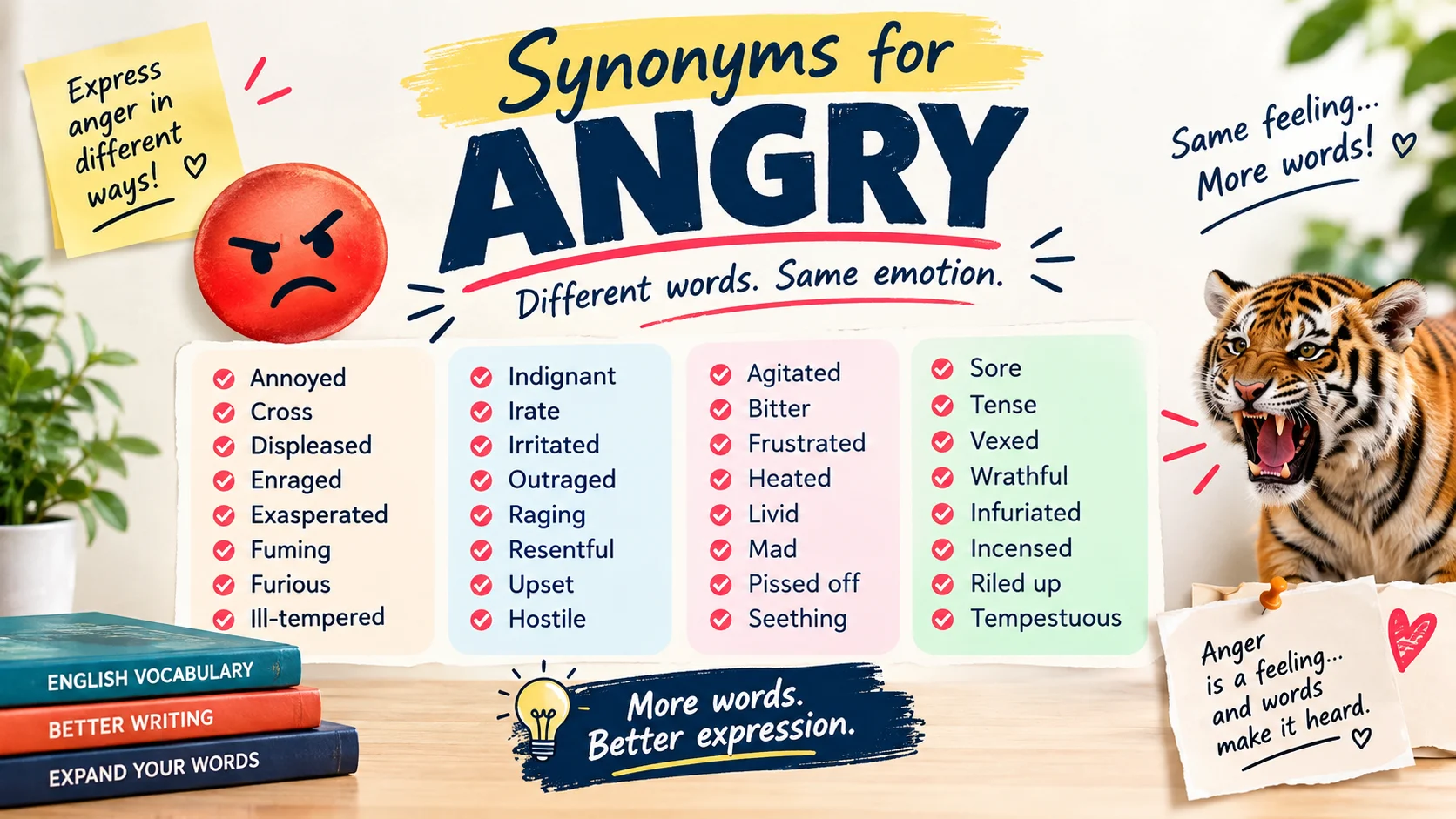
Looking for a better word than “anger” that captures exactly how someone feels? Common synonyms and related alternatives include irritation, annoyance, frustration, resentment, indignation, rage, and fury, but each conveys a different shade or intensity of emotion.
Annoyance can describe mild displeasure, frustration often comes from feeling blocked or disappointed, resentment suggests lasting bitterness, while indignation reflects anger over something considered unfair or wrong.
At the stronger end, rage and fury describe intense anger. If you’re searching for the right synonyms for anger for an essay, story, speech, workplace message, or everyday conversation, this guide will help you choose precisely. You’ll discover alternatives organized by meaning, intensity, context, and tone, with clear examples showing how they differ. By the end, you’ll know not only which words relate to “anger,” but which one best expresses the exact emotion and intensity you mean.
Rage
Meaning: Rage is extremely strong anger that can be difficult to control.
Examples:
- He was shaking with rage after the unfair decision.
- Her rage quickly filled the room.
Fury
Meaning: Fury is very powerful and intense anger.
Examples:
- The customer shouted in fury at the mistake.
- His face showed clear fury.
Wrath
Meaning: Wrath is very strong anger, especially when someone feels deeply wronged.
Examples:
- The workers feared the manager’s wrath.
- His actions brought the wrath of his rivals.
Ire
Meaning: Ire is a strong feeling of anger.
Examples:
- The new rule raised the teacher’s ire.
- His comment drew the ire of many readers.
Indignation
Meaning: Indignation is anger caused by something you believe is unfair or wrong.
Examples:
- She spoke with indignation about the unfair treatment.
- The decision sparked public indignation.
Resentment
Meaning: Resentment is lasting anger caused by unfair treatment or past hurt.
Examples:
- He still felt resentment toward his former boss.
- Years of resentment hurt their friendship.
Irritation
Meaning: Irritation is a mild feeling of anger caused by something annoying.
Examples:
- The constant noise caused irritation.
- I felt irritation when the website stopped working.
Annoyance
Meaning: Annoyance is a mild feeling of anger caused by something bothersome.
Examples:
- Her repeated questions became an annoyance.
- I could hear the annoyance in his voice.
Frustration
Meaning: Frustration is anger caused by being unable to do or achieve something.
Examples:
- He felt frustration when the file would not open.
- Her frustration grew after several failed attempts.
Exasperation
Meaning: Exasperation is strong annoyance caused by repeated problems or mistakes.
Examples:
- She sighed in exasperation at the messy kitchen.
- His exasperation was clear after the third delay.
Aggravation
Meaning: Aggravation is anger or annoyance caused by a difficult problem.
Examples:
- The broken printer was a source of aggravation.
- Traffic gave me a lot of aggravation today.
Displeasure
Meaning: Displeasure is a feeling of being unhappy or mildly angry about something.
Examples:
- The customer showed her displeasure with the service.
- His displeasure was easy to notice.
Outrage
Meaning: Outrage is very strong anger caused by something shocking, unfair, or offensive.
Examples:
- The unfair ruling caused widespread outrage.
- People expressed outrage over the sudden change.
Vexation
Meaning: Vexation is a feeling of annoyance or frustration.
Examples:
- He shook his head in vexation.
- The long delay caused great vexation.
Hostility
Meaning: Hostility is angry and unfriendly behavior toward a person or group.
Examples:
- There was open hostility between the two teams.
- His hostile attitude made the meeting uncomfortable.
Animosity
Meaning: Animosity is strong dislike or anger toward another person or group.
Examples:
- Old animosity kept the neighbors apart.
- The players showed no animosity after the match.
Acrimony
Meaning: Acrimony is bitter anger shown during a disagreement.
Examples:
- The discussion ended with considerable acrimony.
- Their divorce was marked by bitter acrimony.
Bitterness
Meaning: Bitterness is deep anger or hurt that remains for a long time.
Examples:
- He spoke with bitterness about his old job.
- Her bitterness made forgiveness difficult.
Umbrage
Meaning: Umbrage is anger or offense caused by something someone has said or done.
Examples:
- She took umbrage at his rude comment.
- He took umbrage when his idea was rejected.
Choler
Meaning: Choler is an old-fashioned word for anger or a quick temper.
Examples:
- His choler rose during the heated discussion.
- The writer was known for his quick choler.
Spleen
Meaning: Spleen is an old-fashioned word for anger or bitter emotion.
Examples:
- He used the letter to vent his spleen.
- She spoke out of spleen after the argument.
Crossness
Meaning: Crossness is a state of being annoyed, bad-tempered, or angry.
Examples:
- His crossness was obvious after the long trip.
- The child’s crossness disappeared after lunch.
Irascibility
Meaning: Irascibility is a tendency to become angry very easily.
Examples:
- His irascibility made small problems seem much bigger.
- Her irascibility was well known among her coworkers.
Irritability
Meaning: Irritability is a tendency to become annoyed or angry easily.
Examples:
- Lack of sleep can increase irritability.
- His irritability was noticeable during the busy week.
Irateness
Meaning: Irateness is a state of being very angry.
Examples:
- Her irateness was clear from her sharp tone.
- His irateness surprised everyone at the meeting.
Peevishness
Meaning: Peevishness is a state of being easily annoyed or slightly angry.
Examples:
- His peevishness made the morning unpleasant.
- She answered with unusual peevishness.
Testiness
Meaning: Testiness is a tendency to become annoyed or angry quickly.
Examples:
- His testiness showed during the long wait.
- I noticed some testiness in her reply.
Touchiness
Meaning: Touchiness is a tendency to become angry or offended easily.
Examples:
- His touchiness made simple jokes difficult.
- Her touchiness was obvious when we mentioned the mistake.
Crankiness
Meaning: Crankiness is a bad-tempered or easily annoyed mood.
Examples:
- The baby’s crankiness lasted all morning.
- My crankiness disappeared after I got some rest.
Grumpiness
Meaning: Grumpiness is a bad-tempered mood in which someone seems annoyed or unhappy.
Examples:
- His morning grumpiness made everyone laugh.
- Coffee usually helps with my grumpiness.
Surliness
Meaning: Surliness is an unfriendly and bad-tempered way of behaving.
Examples:
- The clerk’s surliness upset the customer.
- His surliness made it hard to ask for help.
Synonyms for Clear: 64+ Better Words for Different Meanings
Bad Temper
Meaning: Bad temper is a habit of becoming angry or upset easily.
Examples:
- His bad temper often caused arguments.
- She is trying to control her bad temper.
Ill Temper
Meaning: Ill temper is a state of being angry, impatient, or unpleasant.
Examples:
- His ill temper ruined the family dinner.
- She apologized for showing ill temper.
Hot Temper
Meaning: A hot temper is a tendency to become angry very quickly.
Examples:
- He has a hot temper but usually calms down fast.
- Her hot temper sometimes causes problems at work.
Temper
Meaning: Temper is a person’s tendency to become angry.
Examples:
- He lost his temper during the argument.
- She worked hard to control her temper.
Wrathfulness
Meaning: Wrathfulness is a state of showing or feeling great anger.
Examples:
- The character’s wrathfulness made him seem frightening.
- His wrathfulness was clear after the betrayal.
Anger
Meaning: Anger is a strong feeling of displeasure that happens when something feels wrong or upsetting.
Examples:
- She felt anger after hearing the unfair news.
- His anger faded after they talked.
Fury
Meaning: Fury describes anger that is extremely powerful and intense.
Examples:
- He stormed out in fury after the argument.
- The unfair accusation filled her with fury.
Rage
Meaning: Rage describes anger that is so strong that it may be hard to control.
Examples:
- He struggled to control his rage.
- The sudden loss sent him into a rage.
Wrath
Meaning: Wrath describes powerful anger, often connected with punishment or judgment.
Examples:
- The dishonest official faced public wrath.
- Nobody wanted to attract the king’s wrath.
Resentment
Meaning: Resentment is anger that remains because of a past wrong or unfair experience.
Examples:
- She carried resentment for many years.
- His resentment grew after he was repeatedly ignored.
Irritation
Meaning: Irritation is a small amount of anger caused by something that bothers you.
Examples:
- The buzzing sound caused irritation.
- He showed irritation when the meeting ran late.
Annoyance
Meaning: Annoyance is a mild angry feeling caused by something unpleasant or bothersome.
Examples:
- The repeated calls became an annoyance.
- She smiled despite her annoyance.
Frustration
Meaning: Frustration is an angry feeling caused by difficulty, failure, or blocked plans.
Examples:
- The slow internet caused frustration.
- He hid his frustration during the test.
Synonyms of Sigma : Independent, Self-Reliant & Nonconformist
Exasperation
Meaning: Exasperation is strong irritation caused by repeated trouble or failure.
Examples:
- She raised her hands in exasperation.
- His exasperation grew with every delay.
Aggravation
Meaning: Aggravation is a feeling of anger caused by a difficult or annoying situation.
Examples:
- The paperwork caused endless aggravation.
- I do not need more aggravation today.
Displeasure
Meaning: Displeasure is a feeling of unhappiness or mild anger about something.
Examples:
- The manager expressed his displeasure.
- Her displeasure was clear from her expression.
Outrage
Meaning: Outrage is intense anger about something considered deeply wrong or unfair.
Examples:
- The news caused outrage across the community.
- His decision was met with outrage.
Vexation
Meaning: Vexation is annoyance or frustration caused by something difficult or irritating.
Examples:
- He showed vexation when the plan failed.
- The constant noise was a source of vexation.
Frequently Asked Questions About Synonyms for Anger
What are the best synonyms for anger?
The best synonyms depend on the strength and type of emotion. Common choices include rage, fury, wrath, ire, irritation, annoyance, frustration, resentment, indignation, and outrage.
What is the strongest synonym for anger?
Rage and fury are among the strongest common synonyms for anger. They suggest extremely powerful emotion that may be difficult to control.
What is a mild synonym for anger?
Irritation, annoyance, displeasure, peevishness, and vexation can describe mild forms of anger. They are useful when someone is bothered but not extremely angry.
What is a professional word for anger?
In formal writing, words such as indignation, resentment, displeasure, frustration, hostility, and outrage can work well. The best choice depends on the exact situation.
What is the difference between anger, rage, and fury?
Anger is the general feeling. Rage and fury describe much stronger forms of anger. Rage often suggests anger that is difficult to control.
What are good synonyms for anger in an essay?
Good choices include frustration, resentment, indignation, outrage, hostility, irritation, displeasure, and anger. Choose the word that matches the situation instead of replacing every use of “anger.”
Why should I learn synonyms for anger?
Learning these words helps you describe emotions more accurately. It can also make essays, blogs, emails, stories, and everyday conversations clearer and less repetitive.
Conclusion
Learning synonyms for anger gives you more ways to describe emotions clearly. Words such as irritation, frustration, resentment, indignation, rage, and fury show different levels and types of anger. This stronger vocabulary can improve your writing, blogging, speaking, and daily communication. Practice these words in emails, essays, stories, and conversations. With regular use, you will become better at choosing the right word for every situation.

I am Meer Hadi, a passionate language and content writer at SynonymLibrary.com. I focus on creating helpful word guides that make it easier for readers to choose the right words, understand meanings, and express their ideas more clearly. Through my work, I aim to support students, writers, and professionals in building stronger communication skills.