Have you ever felt down but didn’t know the right word to say it? Maybe you texted a friend, “I feel sad,” again and again. It gets boring fast. We all feel low sometimes. A pet gets sick. A friend moves away. Rain ruins your big plan. These moments make us sad.
The word “sad” means you feel unhappy or low inside. It is one of the first feeling words we learn. But there are many better words to use.
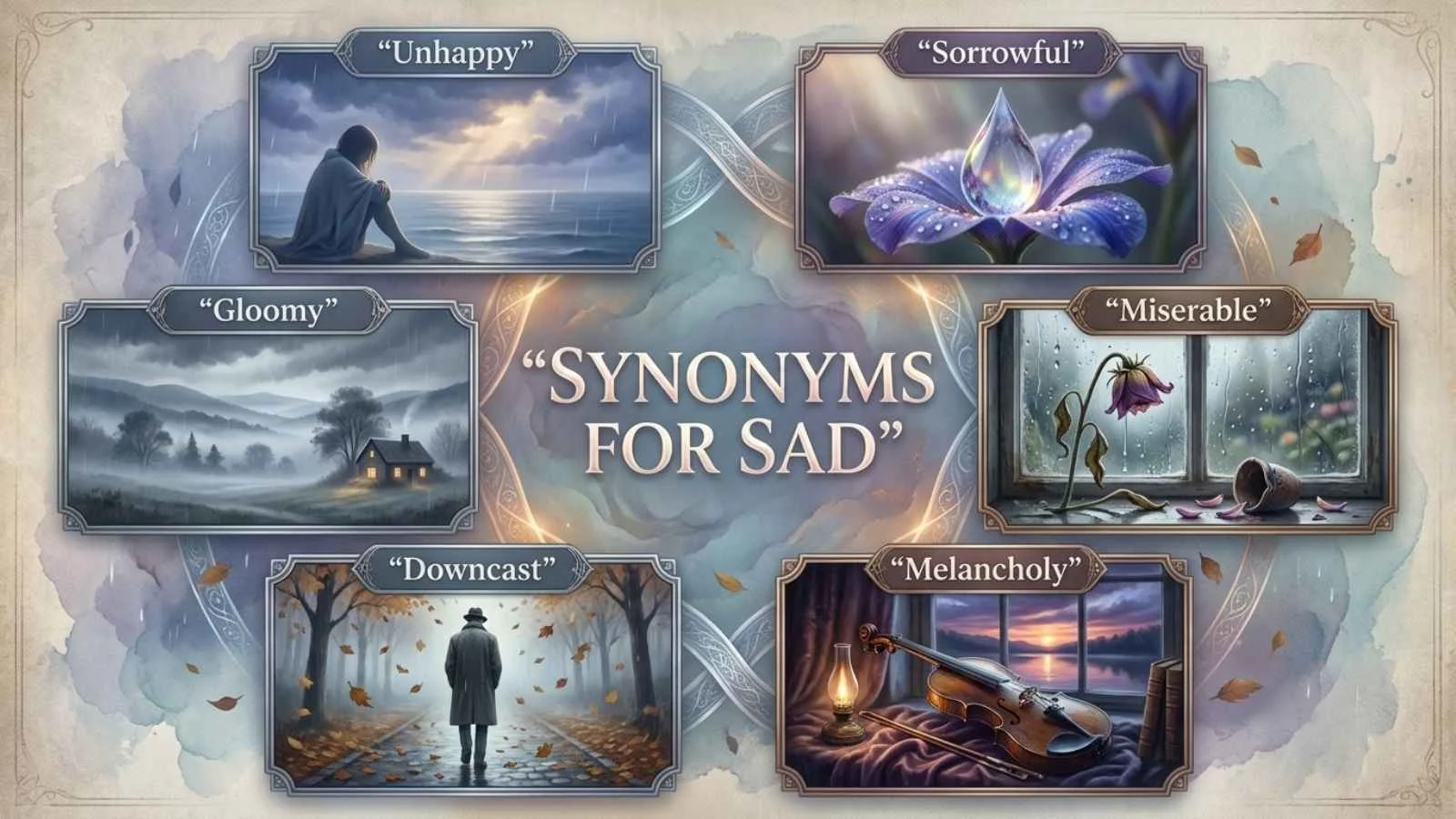
Knowing more synonyms for sad helps students write essays. It helps bloggers sound fresh, it helps writers paint clear pictures, and it helps daily English users speak with feeling. This guide gives you 50 simple words. Each one will make your writing strong and clear.
Meaning and Origin of Sad
Meaning
“Sad” means you feel unhappy. Your heart feels heavy. You may want to cry. You may feel tired or low. It is the opposite of happy. We feel sad when something goes wrong. We feel sad when we lose something we love.
Origin
The word “sad” is very old. It comes from Old English “sæd.” Long ago, it meant “full” or “weary.” Over time, the meaning changed. Now it means unhappy or low in spirit. The word has been used for hundreds of years.
1. Unhappy
Meaning:
This means you do not feel good or joyful.
Usage:
People use this word in daily talk and simple writing.
Examples:
- She felt unhappy after the test.
- He looked unhappy all day long.
2. Gloomy
Meaning:
This means you feel dark and low inside.
Usage:
This word fits sad moods and dull, gray days.
Examples:
- The boy felt gloomy in the rain.
- Her face looked gloomy at school.
3. Down
Meaning:
This means your mood is low and flat.
Usage:
People say this a lot in casual chats with friends.
Examples:
- I feel a bit down today.
- He has been down since Monday.
4. Miserable
Meaning:
This means you feel very sad and full of pain.
Usage:
Use this word for strong, deep sadness.
Examples:
- She was miserable with a bad cold.
- The lost dog made him miserable.
5. Heartbroken
Meaning:
This means your heart hurts from a big loss.
Usage:
People use this for breakups or losing a loved one.
Examples:
- She was heartbroken when he left.
- The team felt heartbroken after the loss.
6. Blue
Meaning:
This means you feel a little sad and low.
Usage:
This is a soft, friendly word for mild sadness.
Examples:
- I feel blue on cold winter nights.
- He seemed blue after the trip ended.
7. Sorrowful
Meaning:
This means you feel deep grief and sadness.
Usage:
This word fits serious writing and sad events.
Examples:
- Her sorrowful eyes told the whole story.
- He gave a sorrowful goodbye.
8. Downhearted
Meaning:
This means you have lost your good spirits.
Usage:
Use this when someone feels low and gives up hope.
Examples:
- She felt downhearted after the bad news.
- The boys were downhearted about the rain.
9. Glum
Meaning:
This means you look sad and quiet.
Usage:
People use this for a silent, low mood.
Examples:
- He sat glum in the corner.
- Her glum face worried me.
10. Dejected
Meaning:
This means you feel let down and low.
Usage:
Use this after a failure or loss.
Examples:
- He looked dejected after the game.
- She felt dejected when no one came.
11. Melancholy
Meaning:
This means a soft, deep, and quiet sadness.
Usage:
This word fits books, poems, and calm writing.
Examples:
- A melancholy song played softly.
- She felt melancholy on the long drive.
12. Despondent
Meaning:
This means you feel sad and out of hope.
Usage:
Use this for strong sadness with no joy left.
Examples:
- He grew despondent after many tries.
- She felt despondent about her job.
13. Mournful
Meaning:
This means you feel sad like you are grieving.
Usage:
People use this when someone is in deep grief.
Examples:
- The dog gave a mournful cry.
- Her mournful look filled the room.
14. Tearful
Meaning:
This means your eyes are full of tears.
Usage:
Use this when someone is close to crying.
Examples:
- She was tearful at the airport.
- His tearful goodbye broke my heart.
15. Crestfallen
Meaning:
This means you feel sad and beaten down.
Usage:
Use this when hope is gone after bad news.
Examples:
- He looked crestfallen at the score.
- She felt crestfallen when she lost.
16. Forlorn
Meaning:
This means you feel sad, lost, and alone.
Usage:
This word fits lonely and empty feelings.
Examples:
- The forlorn child sat by the gate.
- He felt forlorn in the big city.
17. Wistful
Meaning:
This means a soft sadness from missing something.
Usage:
Use this when you long for the past.
Examples:
- She gave a wistful smile at the photo.
- He felt wistful about the old days.
18. Heavyhearted
Meaning:
This means your heart feels heavy with sadness.
Usage:
Use this for deep, quiet sorrow.
Examples:
- She left the town heavyhearted.
- He felt heavyhearted at the farewell.
19. Woeful
Meaning:
This means full of woe and great sadness.
Usage:
This word fits sad stories and bad events.
Examples:
- The woeful tale made me cry.
- He told a woeful story of loss.
20. Disheartened
Meaning:
This means you have lost your courage and joy.
Usage:
Use this when someone wants to give up.
Examples:
- She felt disheartened by the failure.
- The team grew disheartened over time.
21. Low
Meaning:
This means your mood is down and weak.
Usage:
People use this often in simple daily talk.
Examples:
- I feel low this morning.
- He has been low all week.
22. Distressed
Meaning:
This means you feel sad and very upset.
Usage:
Use this when worry mixes with sadness.
Examples:
- She felt distressed by the news.
- He looked distressed and pale.
23. Grief-stricken
Meaning:
This means you feel deep pain from a great loss.
Usage:
Use this when someone loses a loved one.
Examples:
- She was grief-stricken at the funeral.
- He sat grief-stricken for hours.
24. Somber
Meaning:
This means you feel serious and sad.
Usage:
This word fits quiet, solemn moments.
Examples:
- The room felt somber and still.
- He gave a somber nod.
25. Heartsick
Meaning:
This means your heart aches with sadness.
Usage:
Use this when you miss or long for something.
Examples:
- She felt heartsick for her home.
- He grew heartsick over time.
26. Downcast
Meaning:
This means you look sad with your eyes down.
Usage:
People use this for a low, quiet mood.
Examples:
- His downcast eyes said it all.
- She walked away downcast.
27. Pained
Meaning:
This means you feel hurt and sad inside.
Usage:
Use this when sadness shows real pain.
Examples:
- He gave a pained look.
- Her pained voice was soft.
28. Troubled
Meaning:
This means you feel sad and worried at the same time.
Usage:
Use this when something heavy is on your mind.
Examples:
- She felt troubled all night.
- His troubled face told the truth.
29. Brokenhearted
Meaning:
This means your heart is broken from deep hurt.
Usage:
Use this for lost love or great loss.
Examples:
- She was brokenhearted for weeks.
- He felt brokenhearted at the news.
30. Doleful
Meaning:
This means you feel sad and full of grief.
Usage:
This word fits poems and old-style writing.
Examples:
- The doleful tune made her cry.
- He had a doleful look.
31. Cheerless
Meaning:
This means there is no joy or cheer at all.
Usage:
Use this for dull, sad places or moods.
Examples:
- The cheerless house felt cold.
- Her day was cheerless and gray.
32. Heartrending
Meaning:
This means something so sad it hurts your heart.
Usage:
Use this for very moving, sad moments.
Examples:
- It was a heartrending goodbye.
- The film had a heartrending end.
33. Inconsolable
Meaning:
This means you are too sad to be comforted.
Usage:
Use this for deep grief that won’t ease.
Examples:
- The child was inconsolable.
- She felt inconsolable after the loss.
34. Lonesome
Meaning:
This means you feel sad and all alone.
Usage:
Using this when being alone makes you sad.
Examples:
- He felt lonesome on the road.
- The lonesome cat sat by the door.
35. Despairing
Meaning:
This means you feel sad with no hope left.
Usage:
Use this for the deepest, darkest sadness.
Examples:
- She gave a despairing sigh.
- He felt despairing about the future.
36. Bereft
Meaning:
This means you feel sad and empty after loss.
Usage:
Use this when something dear is gone.
Examples:
- She felt bereft when he moved away.
- He was bereft of all joy.
37. Joyless
Meaning:
This means there is no joy in your heart.
Usage:
Use this for a flat, dull, sad mood.
Examples:
- His days felt joyless and long.
- She gave a joyless smile.
38. Plaintive
Meaning:
This means a sad sound that asks for pity.
Usage:
Use this for sad voices, cries, or songs.
Examples:
- The bird gave a plaintive call.
- Her plaintive voice was soft.
39. Disconsolate
Meaning:
This means you are so sad that nothing helps.
Usage:
Use this for deep grief with no comfort.
Examples:
- He sat disconsolate by the window.
- She felt disconsolate for days.
40. Sullen
Meaning:
This means you are sad and quiet in a sour way.
Usage:
Use this when sadness turns into a bad mood.
Examples:
- The boy stayed sullen all day.
- She gave a sullen reply.
41. Tormented
Meaning:
This means you feel deep, painful sadness.
Usage:
Use this when sadness brings real suffering.
Examples:
- He felt tormented by the loss.
- Her tormented mind found no rest.
42. Anguished
Meaning:
This means you feel sharp pain and deep sadness.
Usage:
Use this for very strong, hurting emotions.
Examples:
- She gave an anguished cry.
- His anguished face was hard to see.
43. Despair
Meaning:
This means a deep sadness with no hope.
Usage:
Use this for the lowest point of feeling sad.
Examples:
- She fell into despair after the loss.
- His eyes were full of despair.
44. Heavy
Meaning:
This means your heart feels weighed down.
Usage:
Use this for quiet, deep sadness.
Examples:
- My heart felt heavy at the news.
- She left with a heavy heart.
45. Mopey
Meaning:
This means you are sad and slow with no energy.
Usage:
This is a soft, casual word for a low mood.
Examples:
- He was mopey all weekend.
- She felt mopey after the game.
46. Pensive
Meaning:
This means you are quiet, deep in sad thought.
Usage:
Use this for a calm, thoughtful sadness.
Examples:
- She sat pensive by the lake.
- His pensive mood lasted all evening.
47. Regretful
Meaning:
This means you feel sad about something you did.
Usage:
Use this when sadness comes from a mistake.
Examples:
- He felt regretful for his words.
- She gave a regretful smile.
48. Heartbroken-looking
Meaning:
This means you look like your heart is broken.
Usage:
Use this to describe a deeply sad face.
Examples:
- The heartbroken-looking man sat alone.
- She had a heartbroken-looking stare.
49. Weepy
Meaning:
This means you feel sad and ready to cry.
Usage:
Use this for soft, tearful sadness.
Examples:
- She felt weepy at the movie.
- He got weepy at the goodbye.
50. Crushed
Meaning:
This means you feel deeply hurt and very sad.
Usage:
Use this when bad news breaks your spirit.
Examples:
- He felt crushed by the loss.
- She was crushed when she failed.
FAQs
What is another word for sad?
You can say “unhappy,” “gloomy,” “down,” or “blue.”
Can I use “gloomy” instead of “sad”?
Yes. “Gloomy” works well for a dark, low mood.
What is a strong word for very sad?
Try “heartbroken,” “miserable,” or “despairing.”
Which sad synonym is best for daily talk?
Use simple words like “down,” “low,” or “blue.”
Is “melancholy” a good word for writing?
Yes. It fits poems, books, and calm, soft writing.
Conclusion
Learning synonyms for sad makes you a better writer. Your essays will sound rich and clear, your blogs will feel fresh and new, and your speaking will carry more feeling. Good words help you connect with people. So try these new words today. Use them in your emails, use them in your essays, use them in your daily talk. The more you practice, the easier it gets. Soon, the right word will come fast. Keep going, and watch your English grow strong.

I am Joseph Clark, a vocabulary and language content writer at SynonymLibrary.com. I create clear, practical synonym guides that help readers improve their writing, word choice, and communication skills. My goal is to make language learning simple, accurate, and useful for students, writers, professionals, and everyday learners.