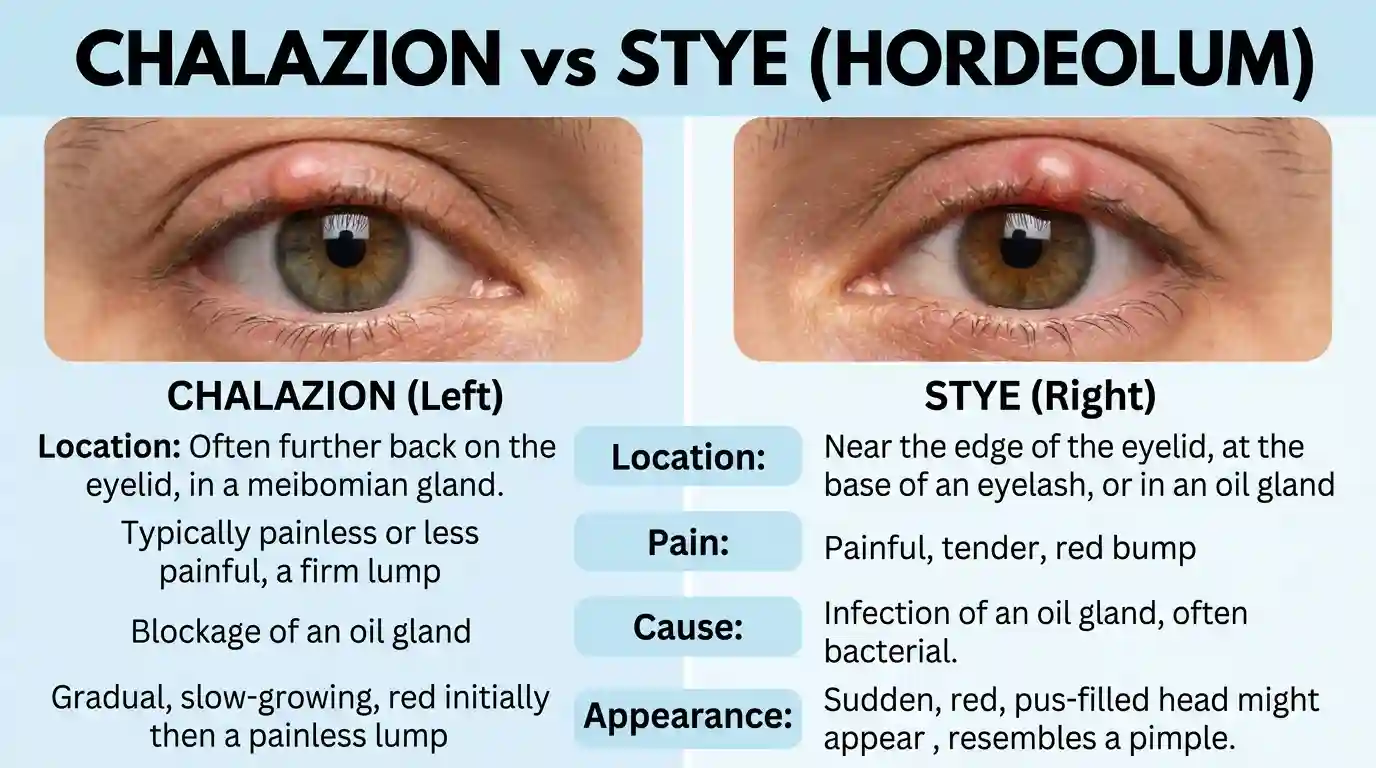
A chalazion is usually a painless eyelid lump caused by a blocked oil gland, while a stye is typically a painful, red lump caused by an infection in an eyelid gland or eyelash follicle. Styes often develop along the eyelid edge, while chalazia usually form farther back in the eyelid and can last longer.
Key Takeaways
- Styes are usually painful and linked to bacterial infection.
- Chalazia are usually painless and result from a blocked, inflamed oil gland.
- A stye commonly appears near the eyelashes, while a chalazion is often farther back in the eyelid.
- Warm compresses are commonly recommended for both conditions.
- Do not squeeze or pop an eyelid lump because this can worsen irritation or spread infection.
Chalazion vs Stye: Quick Comparison
| Feature | Chalazion | Stye |
|---|---|---|
| Main cause | Blocked and inflamed oil gland | Usually a bacterial infection |
| Pain | Usually painless or mildly tender | Usually painful or tender |
| Location | Often farther back in the eyelid | Usually near the eyelid edge or eyelashes |
| Appearance | Firm, rounded lump | Red, swollen bump that may resemble a pimple |
| Pus | Usually absent | May contain pus |
| Onset | Often develops more gradually | Often develops more suddenly |
| Typical course | Can last weeks or longer | Often improves within days to about 1–2 weeks |
| Medical term | Chalazion | Hordeolum |
Although they look similar, they are not the same condition. Both involve structures in the eyelid, and both may improve with conservative care.
What Is a Chalazion?
A chalazion is a firm lump that develops when an oil-producing gland in the eyelid becomes blocked. These glands, including the meibomian glands, help produce the oily part of the tear film.
When the gland becomes blocked, material can build up and trigger inflammation. The result is often a rounded lump that is not very painful.
A chalazion can occur on the upper or lower eyelid. It may be more noticeable on the inner or middle portion of the lid rather than directly at the eyelash line.
Chalazion Symptoms
Common signs include:
- A firm lump in the eyelid
- Mild swelling
- Little or no pain
- Some tenderness, especially early on
- Eyelid irritation
- Watery eyes
- Blurred vision if the lump becomes large enough to press against the eye
A chalazion can initially be red or tender. As the inflammation settles, however, the remaining lump may become relatively painless.
What Is a Stye?
A stye, medically called a hordeolum, is a localized infection involving an eyelid gland or eyelash follicle. Bacteria, particularly Staphylococcus aureus, are commonly associated with styes.
A stye often looks like a small red pimple near the eyelid margin. Unlike most chalazia, styes are usually painful or tender.
Stye Symptoms
A stye may cause:
- A red, painful bump
- Eyelid swelling
- Tenderness
- Tearing
- Eye irritation
- Crusting around the eyelid
- A visible spot of pus
- A scratchy or foreign-body sensation
The symptoms can develop relatively quickly. Most uncomplicated styes improve without major treatment, although some require medical attention.
Internal vs. External Styes
There are two common types.
An external stye develops around the base of an eyelash and usually appears along the outer eyelid edge. It may resemble a small pimple.
An internal stye develops inside the eyelid and involves an oil gland. It can be more difficult to see but may cause significant pain, swelling, and tenderness.
Chalazion vs Stye: The Main Differences
Pain and Tenderness
Pain is one of the easiest clues, although it is not a perfect diagnostic test.
A stye is typically painful, sore, or tender because it involves an active infection and inflammation.
A chalazion is generally painless. It may be tender when it first develops, but the discomfort often decreases as the inflammation settles.
Location
Location can also provide a useful clue.
A stye commonly appears near the edge of the eyelid, particularly around the eyelashes. An internal stye, however, can form on the inside of the eyelid.
A chalazion is usually located farther back from the eyelash line and may be easier to feel than to see.
Cause
The biggest medical difference is the underlying process.
A stye is usually associated with a bacterial infection.
A chalazion usually develops because an oil gland becomes blocked and inflamed, rather than because of an active bacterial infection.
Appearance
A stye often looks red and swollen and may develop a yellowish or white point of pus.
A chalazion is more likely to look or feel like a firm, rounded lump without a visible pus-filled center.
How Long They Last
Styes often improve over several days and may resolve within one to two weeks.
Chalazia can be more persistent. A lump may remain for weeks or sometimes longer, even after the initial inflammation has settled.
Can a Stye Turn Into a Chalazion?
Yes, a stye and a chalazion can be related.
After a stye improves, material can remain trapped in an eyelid oil gland. This may leave behind a firmer, less painful lump that behaves more like a chalazion.
However, a stye does not automatically become a chalazion, and the two conditions can also occur independently.
This is one reason an eyelid bump can seem to change over time. A painful, red bump may improve while a smaller, firm lump remains.
How Are Chalazia and Styes Treated?
For many uncomplicated cases, initial care is similar.
Warm Compresses and Gentle Care
A clean, warm compress placed over the closed eyelid can help relieve discomfort and encourage drainage. Mayo Clinic recommends using a warm washcloth for about 5 to 10 minutes several times a day for a stye.
After warming the eyelid, gentle massage may sometimes help the blocked gland drain. Avoid pressing hard on the lump.
Good eyelid hygiene also matters. Wash your hands before touching your eyes, and avoid eye makeup and contact lenses while an active stye is healing.
When Medical Treatment May Be Needed
Most styes do not require prescription treatment. If an infection persists or spreads, a healthcare professional may consider antibiotics or drainage.
A persistent chalazion may also need treatment if it does not resolve, becomes large, repeatedly returns, or affects vision. Depending on the situation, an eye specialist may consider procedures such as drainage or other treatments.
The right treatment depends on the actual diagnosis, so prescription eye medications should not be used simply because an eyelid lump looks like a stye.
What You Should Not Do
The temptation to squeeze an eyelid bump can be strong, especially when it looks like a pimple. Do not pop or squeeze it.
Squeezing a stye can spread infection, while repeatedly pressing or picking at a chalazion can increase irritation and inflammation. Mayo Clinic specifically advises leaving a stye alone rather than trying to pop it.
It is also sensible to avoid sharing eye makeup or towels and to wash your hands before touching your eyes.
When Should You See a Doctor?
Contact a healthcare professional if the lump is not improving, keeps returning, becomes very painful, grows significantly, or affects your vision.
Seek prompt medical attention if redness or swelling spreads beyond the eyelid, the eyelid becomes severely swollen, you develop a fever, or you experience vision changes. These symptoms can indicate a more significant problem than an uncomplicated stye or chalazion.
A persistent or unusual eyelid lump also deserves an examination rather than repeated self-treatment. Most chalazia and styes are harmless, but not every eyelid lump is one of these conditions.
Frequently Asked Questions
Is a chalazion worse than a stye?
Neither is automatically “worse.” A stye is usually more painful because it involves an infection, while a chalazion can be more persistent and may remain as a firm lump for weeks or longer. Both are usually manageable, but severe pain, spreading redness, vision changes, or persistent symptoms warrant medical evaluation.
Can you pop a chalazion or stye?
No. Avoid squeezing or popping either one. Doing so can increase irritation, damage the surrounding tissue, or spread infection if bacteria are involved. Warm compresses are a safer first step for many uncomplicated cases.
Do warm compresses help both a chalazion and a stye?
Warm compresses are commonly used for both. They can soothe the eyelid and help soften material in a blocked gland or encourage drainage. Use a clean cloth and comfortably warm water rather than very hot water, because eyelid skin can burn easily.
How long does a chalazion last?
A chalazion can last longer than a typical stye. Some resolve on their own over several weeks, while others persist longer. If the lump remains, grows, repeatedly returns, or affects vision, an eye professional can determine whether additional treatment is appropriate.
Are chalazia and styes contagious?
The conditions themselves are not generally considered contagious. However, bacteria associated with a stye can be transferred by touching the eye and then another surface or person. Good hand hygiene and avoiding shared eye makeup or towels are sensible precautions.
Conclusion
The simplest way to remember chalazion vs stye is this: a stye is usually a painful, infected eyelid bump, while a chalazion is usually a painless lump caused by a blocked and inflamed oil gland.
A stye tends to appear near the eyelash line and often improves relatively quickly. A chalazion usually sits farther back in the eyelid and can remain for weeks or longer. Because the two can look similar and sometimes occur in sequence, an eye professional should evaluate a persistent, unusual, or vision-affecting lump rather than relying only on appearance.