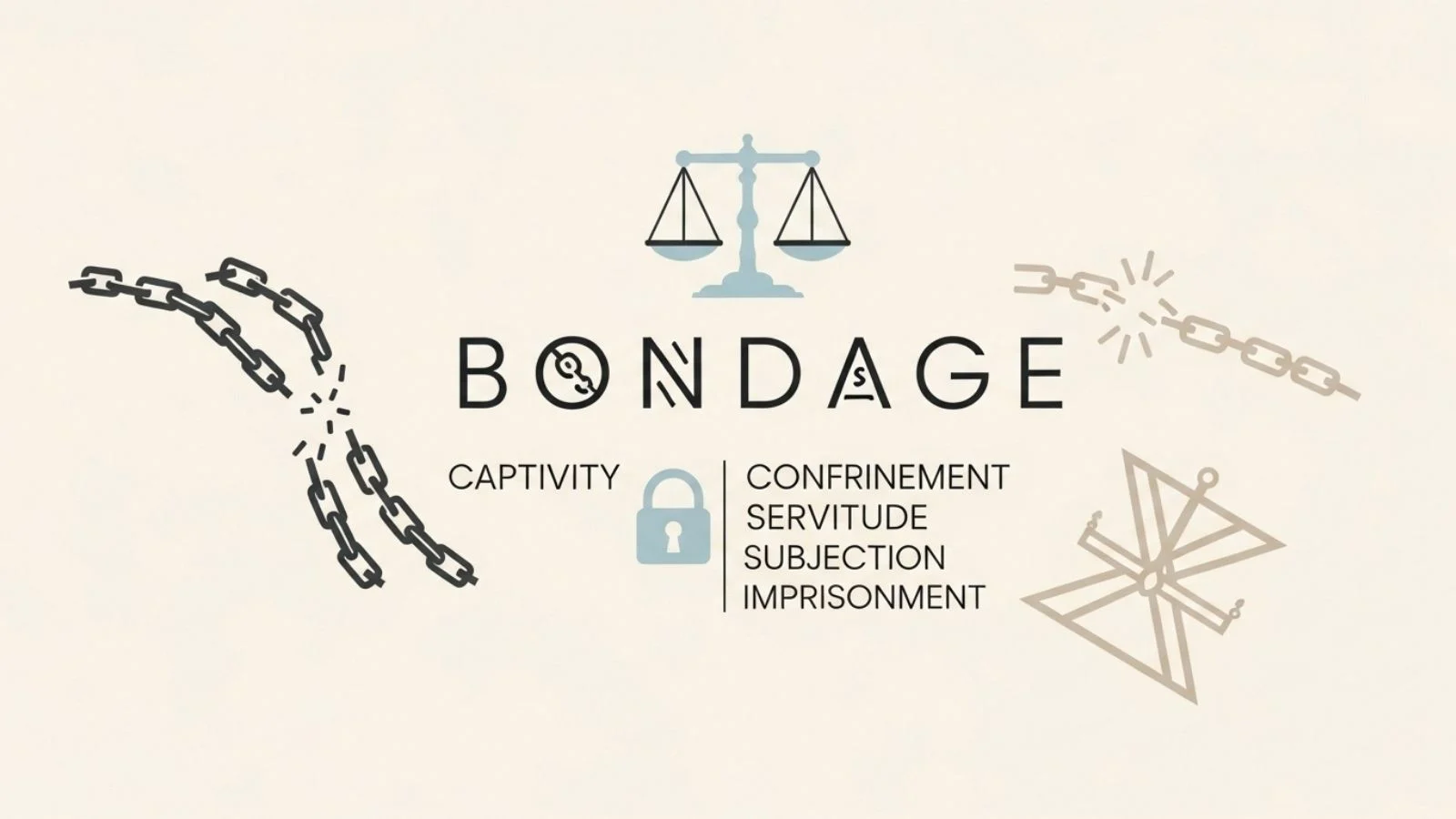
Have you ever read the word bondage in a book, article, or history lesson and paused for a second? Many people do. It is a strong word, and it can carry deep meaning in different kinds of writing.
For example, a student may write, “The people lived in bondage for many years,” and then look for another word with a similar meaning. That is why learning synonyms for bondage is so useful.
In simple English, bondage means a state of being controlled, tied, trapped, or not free. It is useful for students, bloggers, content writers, and daily English users who want a clearer and richer vocabulary. When you know more synonyms for bondage, your writing becomes stronger, easier to understand, and less repetitive. This guide will help you learn synonyms for bondage in a simple and easy way.
Following is the list of synonyms for bondage, which gives you 50 easy words to show big feelings in a simple way.
1. Slavery
Meaning:
This means a condition where people are owned or controlled and are not free.
Examples:
- Many families suffered under slavery.
- The book tells a story about slavery in history.
2. Servitude
Meaning:
This means a state of working for others without real freedom.
Examples:
- He lived in servitude for many years.
- The novel describes a life of servitude.
3. Captivity
Meaning:
This means a state of being kept as a prisoner and not being free.
Examples:
- The bird spent years in captivity.
- They hoped to escape captivity soon.
4. Imprisonment
Meaning:
This means being locked up or kept in a place by force.
Examples:
- His imprisonment lasted a long time.
- The story begins with her imprisonment.
5. Confinement
Meaning:
This means being kept within limits and not allowed to move freely.
Examples:
- The animal showed stress in confinement.
- She struggled with long confinement indoors.
6. Restraint
Meaning:
This means something that holds a person back or limits freedom.
Examples:
- The ropes were a form of restraint.
- He broke free from the restraint.
7. Restriction
Meaning:
This means a limit that stops free action or movement.
Examples:
- The rule placed a restriction on travel.
- She felt the restriction every day.
8. Oppression
Meaning:
This means harsh control that keeps people down.
Examples:
- The people rose against oppression.
- The speech was about years of oppression.
9. Subjugation
Meaning:
This means being brought under the control of another person or group.
Examples:
- The film shows the subjugation of a nation.
- They fought against subjugation.
10. Enslavement
Meaning:
This means the act or state of making someone a slave.
Examples:
- The museum teaches about enslavement.
- The law ended legal enslavement.
11. Domination
Meaning:
This means strong control over someone or something.
Examples:
- The people pushed back against domination.
- Her article discusses political domination.
12. Control
Meaning:
This means power over a person, place, or situation.
Examples:
- He kept strict control over the group.
- She wanted freedom from control.
13. Suppression
Meaning:
This means stopping freedom, rights, or open action.
Examples:
- The report talks about suppression of speech.
- People protested against suppression.
14. Tyranny
Meaning:
This means cruel and unfair rule over people.
Examples:
- The nation suffered under tyranny.
- They dreamed of life without tyranny.
15. Captured state
Meaning:
This means a condition of being caught and not free.
Examples:
- The animal remained in a captured state.
- He hated living in a captured state.
16. Enclosure
Meaning:
This means being shut in or kept inside a space.
Examples:
- The goats stayed inside the enclosure.
- She felt trapped by the enclosure.
17. Detention
Meaning:
This means being held in one place by force or authority.
Examples:
- His detention lasted for weeks.
- They spoke out against unfair detention.
18. Custody
Meaning:
This means being held under the care or control of another.
Examples:
- The man stayed in police custody.
- The child was placed in safe custody.
19. Internment
Meaning:
This means being kept in a special place during a conflict or emergency.
Examples:
- The book covers wartime internment.
- Many families experienced internment.
20. Shackling
Meaning:
This means being held or tied with chains or limits.
Examples:
- The poem speaks of mental shackling.
- They protested the shackling of prisoners.
21. Chains
Meaning:
This means things that bind or hold someone down, in a real or symbolic way.
Examples:
- He broke the chains at last.
- The writer used chains as a symbol of pain.
22. Fetters
Meaning:
This means chains or limits that stop freedom.
Examples:
- She longed to escape those fetters.
- The speech called fear invisible fetters.
23. Yoke
Meaning:
This means a heavy burden or control placed on someone.
Examples:
- The people threw off the yoke of rule.
- He wrote about the yoke of fear.
24. Thraldom
Meaning:
This means a state of being under another’s power.
Examples:
- The old text uses the word thraldom.
- They lived in thraldom for years.
25. Helplessness
Meaning:
This means a condition where someone has no power to act freely.
Examples:
- She felt deep helplessness in that moment.
- His face showed helplessness and fear.
26. Dependence
Meaning:
This means relying on someone else so much that freedom is limited.
Examples:
- His dependence made him feel trapped.
- The story explores emotional dependence.
27. Submission
Meaning:
This means giving in to the power or will of another.
Examples:
- They demanded full submission from the crowd.
- Her silence looked like submission.
28. Subjection
Meaning:
This means being under the power or rule of another person or group.
Examples:
- The nation rejected foreign subjection.
- He spoke against social subjection.
29. Obedience
Meaning:
This means doing what another person tells you to do.
Examples:
- Blind obedience can be dangerous.
- The teacher did not want fear-based obedience.
30. Constraint
Meaning:
This means a limit that stops full freedom.
Examples:
- Money was a major constraint on travel.
- She worked under constant constraint.
31. Limitation
Meaning:
This means something that reduces freedom or choice.
Examples:
- The job came with a big limitation.
- He grew tired of every limitation.
32. Trapping
Meaning:
This means being caught so escape is hard.
Examples:
- The cave caused their trapping overnight.
- She feared emotional trapping in the relationship.
33. Holding
Meaning:
This means keeping someone in one place or under control.
Examples:
- The guards kept the men in holding.
- The movie showed the holding of captives.
34. Seizure
Meaning:
This means taking hold of someone or something by force.
Examples:
- The seizure of the village shocked everyone.
- They spoke about the seizure of power.
35. Entrapment
Meaning:
This means being caught in a hard or unfair situation.
Examples:
- He felt emotional entrapment at home.
- The story centers on social entrapment.
36. Incarceration
Meaning:
This means being kept in prison or another closed place.
Examples:
- His incarceration changed his life.
- The article explores mass incarceration.
37. Forced labor
Meaning:
This means work done because someone is forced to do it.
Examples:
- The report exposed forced labor.
- They escaped a camp of forced labor.
38. Peonage
Meaning:
This means working to pay a debt and losing freedom because of it.
Examples:
- The lesson explained debt peonage.
- Many workers were trapped in peonage.
39. Bond service
Meaning:
This means work done under forced or bound conditions.
Examples:
- The old records mention bond service.
- He studied systems of bond service.
40. Serfdom
Meaning:
This means a condition where workers are tied to land and not fully free.
Examples:
- The history class covered serfdom.
- Many farmers lived in serfdom then.
41. Vassalage
Meaning:
This means being under the power and duty of a stronger ruler.
Examples:
- The kingdom lived in vassalage.
- He compared it to political vassalage.
42. Bonded labor
Meaning:
This means labor done under debt or forced duty.
Examples:
- The article warned about bonded labor.
- They worked for years in bonded labor.
43. Drudgery
Meaning:
This means hard and tiring work with little freedom or joy.
Examples:
- She wanted to escape daily drudgery.
- His life felt full of drudgery.
44. Hardship
Meaning:
This means severe suffering or difficulty.
Examples:
- They survived years of hardship.
- The family faced great hardship together.
45. Burden
Meaning:
This means something heavy that makes life harder.
Examples:
- Debt became a burden on the family.
- He carried the burden in silence.
46. Pressure
Meaning:
This means force that pushes someone and limits free choice.
Examples:
- She felt pressure from every side.
- The pressure made him stay quiet.
47. Grip
Meaning:
This means strong hold or control over someone.
Examples:
- Fear had a strong grip on him.
- The ruler kept a tight grip on power.
48. Hold
Meaning:
This means control that keeps someone from being free.
Examples:
- The past still had a hold on her.
- That system kept a hold on the poor.
49. Powerlessness
Meaning:
This means having no power to change your situation.
Examples:
- She hated the feeling of powerlessness.
- The book describes deep powerlessness.
50. Lack of freedom
Meaning:
This means a condition where a person cannot live or act freely.
Examples:
- The people suffered from a lack of freedom.
- His poem speaks about the lack of freedom.
Conclusion
Learning synonyms for bondage can make your writing deeper and more exact. It helps in essays, blog posts, history writing, and daily communication. These words let you explain control, restraint, and loss of freedom in clearer ways. Practice them in emails, school work, and conversations. The more words you know, the stronger and more natural your English will become.

I am Meer Hadi, a passionate language and content writer at SynonymLibrary.com. I focus on creating helpful word guides that make it easier for readers to choose the right words, understand meanings, and express their ideas more clearly. Through my work, I aim to support students, writers, and professionals in building stronger communication skills.