Have you ever written the same word too many times in one paragraph? It feels boring. It does not sound good. Many students and writers face this problem every day.
Here is a simple example. Instead of writing “She used the right words,” you can write “She used the right expressions.” Both mean the same thing. That is what synonyms for words do. They give you more choices.
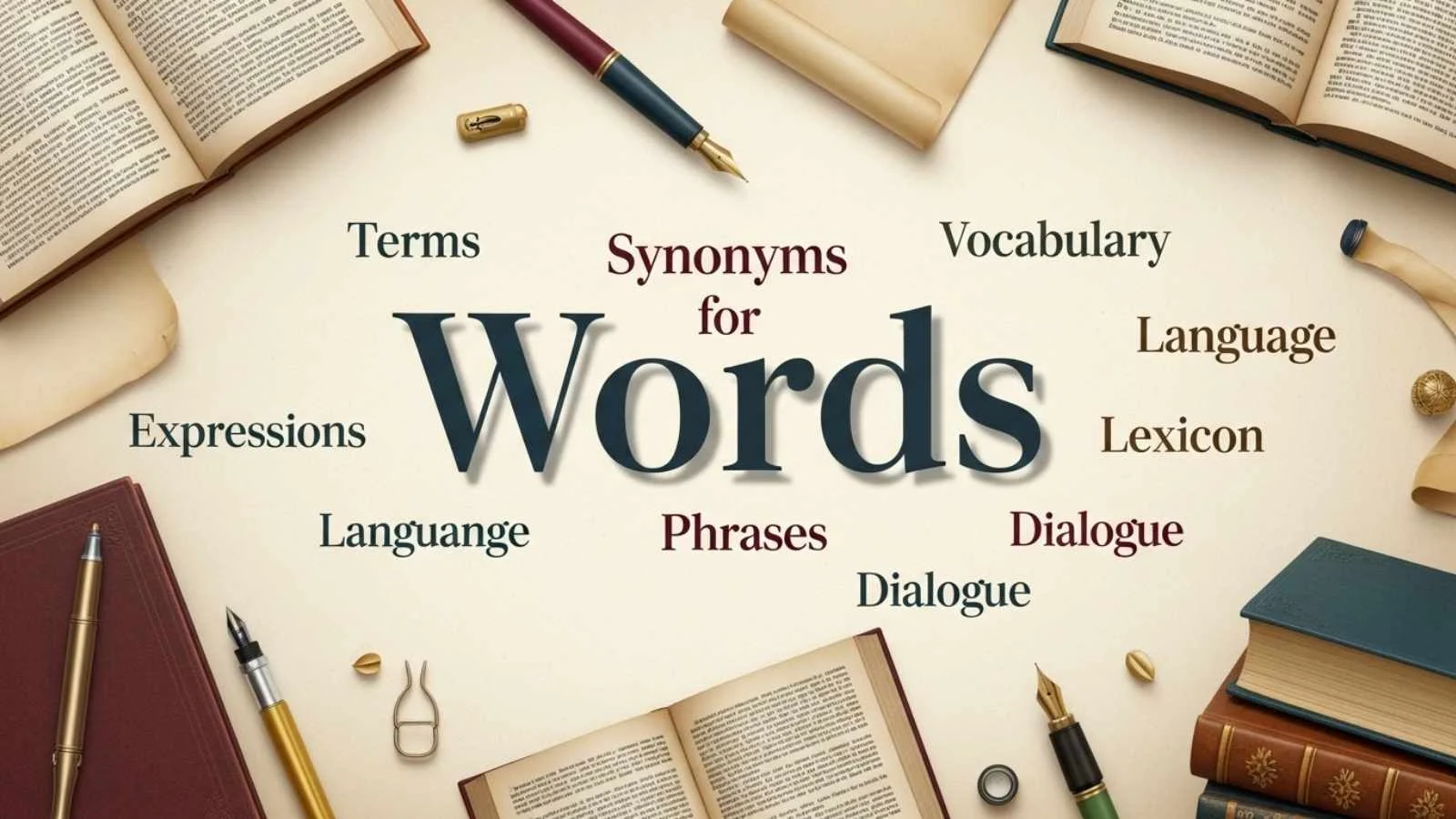
Synonyms for words are words that mean the same thing as another word. They help you say things in a new way. Students use them to write better essays. Bloggers use them to keep readers interested. Content writers use them to sound more creative. Even in daily life, knowing synonyms for words makes your talking and writing much better.
1. Terms
Meaning:
- Terms are words used to name or explain something in a clear way.
Examples:
- The teacher wrote some new terms on the board.
- I need to learn the science terms before the test.
2. Expressions
Meaning:
- Expressions are words or groups of words that share a feeling or idea.
Examples:
- She learned new expressions to use in her writing.
- His happy expressions made the story fun to read.
3. Phrases
Meaning:
- Phrases are small groups of words that go together to share one idea.
Examples:
- He practiced useful phrases for his job interview.
- The book had many phrases for everyday talking.
4. Vocabulary
Meaning:
- Vocabulary is all the words a person knows and can use.
Examples:
- She reads books every day to grow her vocabulary.
- A big vocabulary helps you write strong essays.
5. Language
Meaning:
- Language is the set of words people use to talk and write with each other.
Examples:
- He spoke in simple language so everyone could follow.
- Learning a new language takes time and practice.
6. Utterances
Meaning:
- Utterances are words that someone says out loud.
Examples:
- The baby’s first utterances made her parents very happy.
- Her utterances were slow and easy to hear.
7. Lexicon
Meaning:
- A lexicon is a full list of all the words in a language or subject.
Examples:
- Every job has its own lexicon to learn.
- The science lexicon was hard for beginners to understand.
8. Diction
Meaning:
- Diction is the way a person picks and uses words when writing or speaking.
Examples:
- The writer used simple diction so kids could read the story.
- Good diction helps you sound clear and smart.
9. Verbiage
Meaning:
- Verbiage means using too many words when fewer words would be better.
Examples:
- His email had so much verbiage that it was hard to read.
- Cut the verbiage and keep your writing short and clear.
10. Lingo
Meaning:
- Lingo is the special or informal words used by a group of people.
Examples:
- I did not know the sports lingo when I started watching football.
- Gamers have their own lingo that others may not know.
11. Jargon
Meaning:
- Jargon is the technical language used by people in a specific job or field.
Examples:
- The doctor used jargon that the patient could not follow.
- Try not to use jargon when you write for all readers.
12. Rhetoric
Meaning:
- Rhetoric is the skill of using words in a strong and powerful way.
Examples:
- The speaker used great rhetoric to get the crowd excited.
- Good rhetoric can change how people feel about a topic.
13. Speech
Meaning:
- Speech is the words a person says out loud to share ideas or feelings.
Examples:
- She gave a short speech at her sister’s birthday party.
- His speech was full of kind and warm words.
14. Dialogue
Meaning:
- Dialogue is a talk between two or more people using words.
Examples:
- The dialogue in the book felt real and natural.
- Good dialogue makes a story interesting to read.
15. Text
Meaning:
- Text is written words found in a book, message, or any document.
Examples:
- The text in the manual was short and easy to follow.
- He sent a quick text to say he was on his way.
16. Wording
Meaning:
- Wording is the way words are chosen and put together in a sentence.
Examples:
- Please check the wording of the letter before you send it.
- The wording of the question made it hard to understand.
17. Phrasing
Meaning:
- Phrasing is the way you put words together to share an idea.
Examples:
- His phrasing was very polite and easy to read.
- She changed the phrasing to make the sentence clearer.
18. Idioms
Meaning:
- Idioms are common word groups whose meaning is different from the single words in them.
Examples:
- “Hit the books” is a fun English idiom that means to study.
- Learning idioms helps your English sound more natural.
19. Prose
Meaning:
- Prose is normal written or spoken language that is not a poem.
Examples:
- The story was written in clear and simple prose.
- Good prose is easy to read and understand.
20. Terminology
Meaning:
- Terminology is a group of special words used in one area of study or work.
Examples:
- The science book explained its terminology on the first page.
- It takes time to learn all the legal terminology.
21. Parlance
Meaning:
- Parlance is the way a group of people talk or use words together.
Examples:
- In common parlance, “cool” just means something is great.
- The word has a different meaning in legal parlance.
22. Syllables
Meaning:
- Syllables are the small sound parts that make up a word.
Examples:
- The word “happy” has two syllables.
- Clapping out syllables helps young children learn to spell.
23. Sounds
Meaning:
- Sounds are the basic parts of spoken words that our ears can hear.
Examples:
- Some English sounds are tricky to learn at first.
- She practiced the sounds of her new language every morning.
24. Nomenclature
Meaning:
- Nomenclature is the system of names used in a special subject or field.
Examples:
- Plants have a special nomenclature in biology class.
- The company updated its product nomenclature this year.
25. Moniker
Meaning:
- A moniker is a name or nickname used to call a person or thing.
Examples:
- His moniker on social media was “SpeedKing99.”
- The city got its moniker because of its bright lights.
26. Labels
Meaning:
- Labels are words used to name or describe something or someone.
Examples:
- The food labels showed all the items inside the package.
- We should not put labels on people too fast.
27. Designations
Meaning:
- Designations are official names or titles given to a person or place.
Examples:
- Her job designation changed after she got promoted.
- The old building received a new heritage designation.
28. Names
Meaning:
- Names are words used to call or identify a person, place, or thing.
Examples:
- He forgot the names of all the people at the party.
- Write your name clearly at the top of the test paper.
29. Tokens
Meaning:
- Tokens are single words or units used in a sentence or language system.
Examples:
- In computer language, every word is called a token.
- The teacher broke the sentence into tokens for the class.
30. Morphemes
Meaning:
- Morphemes are the smallest word parts that carry a meaning.
Examples:
- The word “replay” has two morphemes: “re” and “play.”
- Students study morphemes to learn how words are built.
31. Commands
Meaning:
- Commands are strong words or sentences that tell someone what to do.
Examples:
- The coach gave clear commands before the game started.
- Short commands work best in simple instruction guides.
32. Declarations
Meaning:
- Declarations are strong and clear word statements about something.
Examples:
- She made bold declarations about her big plans for the future.
- The class read the declaration together out loud.
33. Sayings
Meaning:
- Sayings are well-known groups of words that share a life truth.
Examples:
- “Actions speak louder than words” is a very old saying.
- My grandmother always had a saying for every problem.
34. Quotes
Meaning:
- Quotes are the exact words that someone said or wrote before.
Examples:
- She opened her speech with a strong and inspiring quote.
- Always use quotation marks when you copy someone’s words.
35. Proverbs
Meaning:
- Proverbs are short and old sayings that teach us a lesson about life.
Examples:
- “The early bird catches the worm” is a popular proverb.
- He started his talk with a wise proverb from his culture.
36. Mantras
Meaning:
- Mantras are short words or phrases people say again and again to feel strong or calm.
Examples:
- Her daily mantra was “I can do this.”
- The team repeated their mantra before every big match.
37. Mottos
Meaning:
- Mottos are short word phrases that show what a person or group believes in.
Examples:
- The school’s motto was “Work Hard, Be Kind.”
- His personal motto kept him going on tough days.
38. Slogans
Meaning:
- Slogans are short and catchy word phrases used in ads or campaigns.
Examples:
- The new slogan for the brand became very popular fast.
- They needed a strong slogan for their school fundraiser.
39. Captions
Meaning:
- Captions are short words written below a photo to tell you what it shows.
Examples:
- She wrote a funny caption under her selfie online.
- The news photo had a simple caption that explained the story.
40. Annotations
Meaning:
- Annotations are extra words or notes added to a text to help explain it.
Examples:
- His annotations filled every white space in the textbook.
- Annotations help readers better understand hard reading passages.
41. Inscriptions
Meaning:
- Inscriptions are words that are written or carved onto a hard surface.
Examples:
- The ring had a sweet inscription inside it.
- Old inscriptions were found on the walls of the cave.
42. Remarks
Meaning:
- Remarks are words said or written to share a thought or reaction.
Examples:
- The teacher’s kind remarks made the student feel proud.
- His opening remarks set a great tone for the whole meeting.
43. Comments
Meaning:
- Comments are words shared to give an opinion or say what you think.
Examples:
- She left a nice comment on the blog post she liked.
- Please share your comments in the box at the bottom.
44. Statements
Meaning:
- Statements are clear word sentences that share facts or opinions.
Examples:
- The company shared an official statement early this morning.
- His statement surprised every single person in the room.
45. Assertions
Meaning:
- Assertions are strong and confident word claims about something being true.
Examples:
- Her assertions were supported by clear and solid proof.
- Do not make bold assertions without facts to back them up.
46. Proclamations
Meaning:
- Proclamations are big and official word announcements made by someone in charge.
Examples:
- The mayor made a proclamation to honor the local firefighters.
- The king’s proclamation was read out loud to the whole village.
47. Announcements
Meaning:
- Announcements are public word statements that share important news with many people.
Examples:
- The school made an announcement about the field trip day.
- The winner’s announcement made the whole crowd cheer loudly.
48. Narratives
Meaning:
- Narratives are stories or accounts told with words in a connected and clear order.
Examples:
- Her personal narrative moved many people in the room.
- A strong narrative helps a brand connect with its customers.
49. Scripts
Meaning:
- Scripts are written words that a person follows when giving a talk or acting.
Examples:
- The actor read through the script many times before filming.
- She wrote a short script for her first YouTube video.
50. Articulations
Meaning:
- Articulations are the clear and careful ways in which words are spoken.
Examples:
- His clear articulations made every word easy to hear.
- Good articulation is very important for public speaking.
Conclusion
Learning synonyms for words makes you a better writer, speaker, and communicator. It helps your blog posts stay interesting. It makes your emails sound more professional. It keeps your essays from feeling boring and flat. Every new word you learn gives you more power to share your ideas clearly. Start using one new synonym each day. Try it in a text message, an email, or a school essay. Small steps lead to big growth. You can do this!

I am Meer Hadi, a passionate language and content writer at SynonymLibrary.com. I focus on creating helpful word guides that make it easier for readers to choose the right words, understand meanings, and express their ideas more clearly. Through my work, I aim to support students, writers, and professionals in building stronger communication skills.