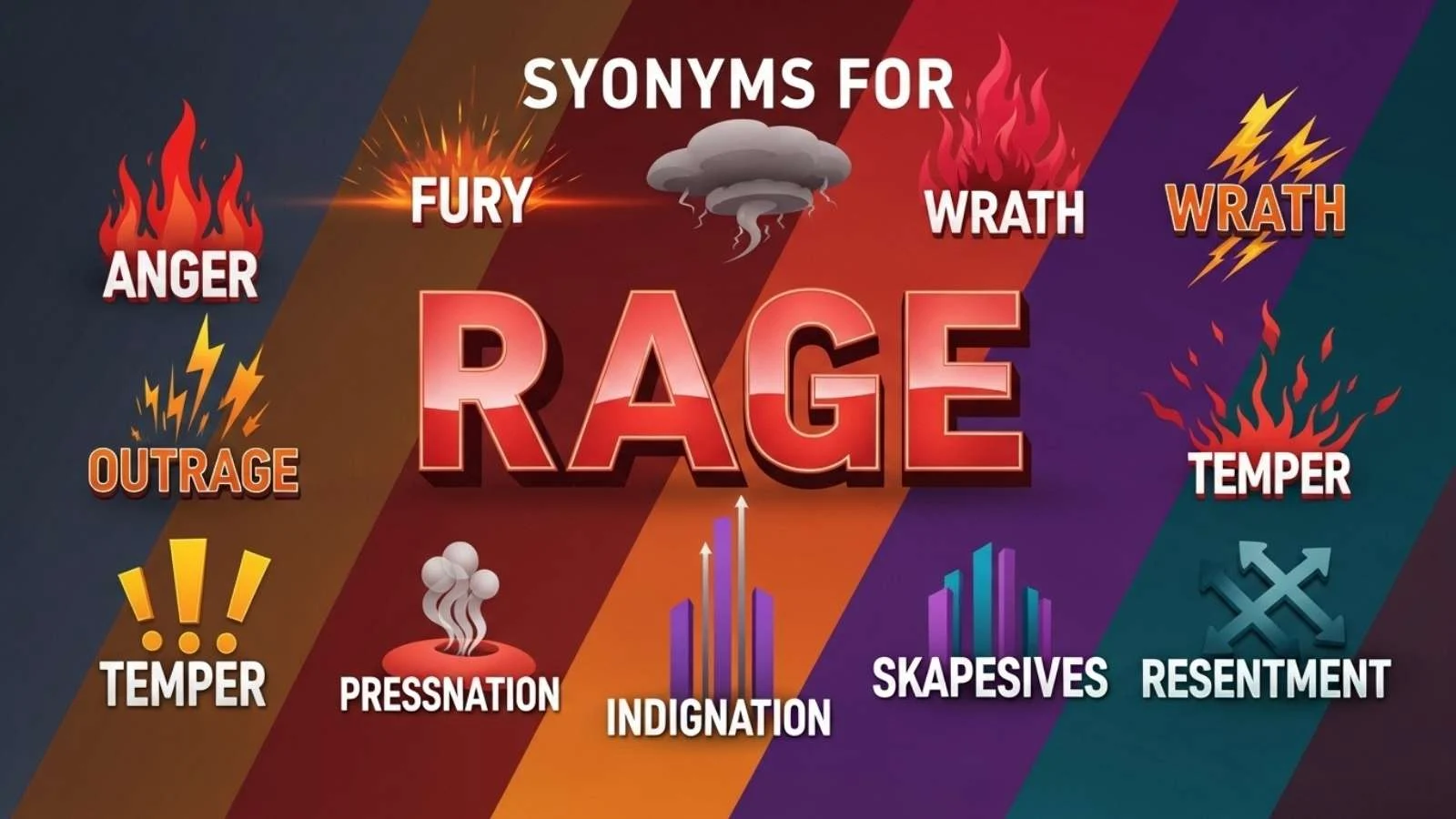
Have you ever felt so angry that your hands started to shake? Maybe someone said something unkind to you. Or maybe things went really wrong, and you just could not calm down. That feeling, that burning, boiling anger, is called rage.
Rage means very strong, out-of-control anger. It is more than just being upset. It is the kind of anger that feels like a fire inside you. When someone loses their temper completely, that is rage.
Knowing synonyms for rage helps you in many ways. Students can write stronger essays about conflict or emotion. Bloggers and content writers can make their stories feel more powerful and real. And in daily life, you can express your feelings in a clearer and more honest way. Instead of saying “I was so angry,” you can say something much more vivid and precise.
Here are 50 great synonyms for rage, each with a simple meaning and two easy example sentences.
1. Anger
Meaning:
- A strong feeling of being very unhappy or upset about something.
Examples:
- His anger grew when he found out he had been lied to.
- She took a deep breath to control her anger before she spoke.
2. Fury
Meaning:
- Very wild and powerful anger that is hard to control.
Examples:
- The coach’s fury was clear when the team made the same mistake twice.
- She slammed the door in fury after the unfair argument.
3. Wrath
Meaning:
- Very strong and serious anger, often used when someone wants to punish or hurt.
Examples:
- The king’s wrath was feared by everyone in the kingdom.
- He faced his father’s wrath after breaking the family rule.
4. Outrage
Meaning:
- Anger caused by something that feels very wrong, unfair, or shocking.
Examples:
- The crowd expressed outrage at the unfair court decision.
- She felt outrage when she saw how the animals were treated.
5. Temper
Meaning:
- A quick burst of anger that a person shows when they are upset.
Examples:
- He has a short temper and gets mad over small things.
- She lost her temper when the waiter got the order wrong again.
6. Ire
Meaning:
- A formal word for strong anger or annoyance.
Examples:
- The new tax rule drew the ire of many small business owners.
- Her ire rose when she was passed over for the promotion again.
7. Indignation
Meaning:
- Anger is felt when something seems unfair, rude, or disrespectful.
Examples:
- He spoke with great indignation about the broken promise.
- The students’ indignation grew as the school ignored their concerns.
8. Exasperation
Meaning:
- Anger mixed with frustration, especially after something keeps going wrong.
Examples:
- She threw her hands up in exasperation after the third delay.
- His exasperation was clear when no one listened to his plan.
9. Hostility
Meaning:
- A feeling of anger combined with being unfriendly or aggressive toward someone.
Examples:
- There was open hostility between the two rival groups.
- The new employee felt hostility from his jealous coworker.
10. Irritation
Meaning:
- A mild but annoying feeling of anger that builds up slowly.
Examples:
- The constant noise from next door caused her great irritation.
- His irritation grew with every minute stuck in traffic.
11. Resentment
Meaning:
- A slow, quiet anger you feel when you think you have been treated unfairly for a long time.
Examples:
- Years of being ignored led to deep resentment in the team.
- She carried resentment toward her old boss for a long time.
12. Bitterness
Meaning:
- Anger mixed with sadness, often caused by a painful past experience.
Examples:
- The bitterness in his voice showed how much the loss had hurt him.
- She spoke with bitterness about the friendship that had ended badly.
13. Vexation
Meaning:
- A feeling of anger or annoyance caused by something that keeps bothering you.
Examples:
- The broken printer was a constant source of vexation for the team.
- She could not hide her vexation when the same error happened again.
14. Displeasure
Meaning:
- A mild feeling of anger or unhappiness when something does not go your way.
Examples:
- The teacher showed displeasure when the class was noisy again.
- His face showed clear displeasure at the poor quality of work.
15. Annoyance
Meaning:
- A light and common form of anger triggered by small, irritating things.
Examples:
- The buzzing fly caused her great annoyance during the meeting.
- He could not hide his annoyance when his phone kept ringing.
16. Frenzy
Meaning:
- A state of wild, out-of-control anger or excitement that takes over a person.
Examples:
- The crowd worked itself into a frenzy after the bad call.
- He acted in a frenzy of rage and said things he later regretted.
17. Passion
Meaning:
- A very strong and intense feeling, including intense anger, that drives a person’s actions.
Examples:
- She argued her point with great passion and fire.
- His passion turned into anger when his idea was rejected again.
Examples:
- She argued her point with great passion and fire in her eyes.
- His passion turned to anger when no one took his plan seriously.
18. Agitation
Meaning:
- A restless and uneasy feeling of anger or worry that makes it hard to stay calm.
Examples:
- You could see the agitation in his face as he paced the room.
- Her agitation grew when the flight was delayed for the third time.
19. Turbulence
Meaning:
- A state of confusion and strong emotional disturbance, often including anger.
Examples:
- The workplace was full of turbulence after the layoffs were announced.
- The turbulence in her emotions made it hard to think clearly.
20. Indignance
Meaning:
- The feeling of being very angry because something that happened was unfair or wrong.
Examples:
- She spoke with indignance when her hard work was given to someone else.
- His indignance was justified after being blamed for someone else’s mistake.
21. Furor
Meaning:
- A sudden wave of very strong public anger or excitement about something.
Examples:
- The new policy caused a furor among the parents at the school.
- The celebrity’s comment created a furor on social media overnight.
22. Acrimony
Meaning:
- Bitter and sharp anger, often shown in the words or tone someone uses.
Examples:
- The debate ended with great acrimony and no agreement.
- There was deep acrimony in their conversation after the betrayal.
23. Ferocity
Meaning:
- Extreme and fierce anger that feels dangerous and wild.
Examples:
- The ferocity of her anger shocked everyone in the room.
- He argued with ferocity when his family was insulted.
24. Tension
Meaning:
- A tight, uncomfortable feeling when anger is building up between people.
Examples:
- There was so much tension at dinner that no one spoke.
- The tension between the two players was obvious to everyone watching.
25. Spite
Meaning:
- Anger that makes someone want to hurt or upset another person on purpose.
Examples:
- She said those hurtful words out of pure spite.
- He did it out of spite, just to make her day harder.
26. Vengeance
Meaning:
- A very strong desire, driven by rage, to hurt someone back for what they did to you.
Examples:
- He was full of vengeance after being wrongly fired from his job.
- The story was about a hero who sought vengeance for his people.
27. Passion
Meaning:
- A deep and powerful emotional intensity that can include fierce anger.
Examples:
- The activist spoke with a passion that moved the entire crowd.
- Her passion for justice turned into fierce anger at the injustice.
28. Eruption
Meaning:
- A sudden and explosive release of anger, like a volcano going off.
Examples:
- His eruption of rage scared the whole office into silence.
- The argument ended in a loud eruption of shouting and tears.
29. Tantrums
Meaning:
- A sudden, loud burst of anger, especially used to describe a child’s uncontrolled outburst.
Examples:
- The toddler threw tantrums every time he didn’t get what he wanted.
- Even some adults throw tantrums when things don’t go their way.
30. Madness
Meaning:
- An extreme form of anger so intense it feels like a loss of all control and reason.
Examples:
- A madness came over him when he heard the terrible news.
- The crowd’s madness was frightening as the protest turned violent.
31. Storm
Meaning:
- A strong, sudden burst of intense anger that comes quickly and powerfully.
Examples:
- A storm of rage swept through him when he read the message.
- She braced herself for the storm she knew was coming after the mistake.
32. Fire
Meaning:
- Intense, burning anger that feels hot and all-consuming inside a person.
Examples:
- There was fire in her eyes as she confronted the bully.
- The fire of his rage was impossible to put out that night.
33. Blaze
Meaning:
- A fierce and fast-moving anger that burns through a person’s patience.
Examples:
- A blaze of anger rose in her chest when she heard the lie.
- His blaze of temper faded as quickly as it had started.
34. Fierceness
Meaning:
- A strong, bold, and intense form of anger that is hard to ignore.
Examples:
- The fierceness in his voice made the room go quiet.
- She defended her team with fierceness when the boss was unfair.
35. Antagonism
Meaning:
- Active and ongoing anger or opposition toward a person or group.
Examples:
- The antagonism between the two departments hurt the whole company.
- His antagonism toward the new rules made meetings very difficult.
36. Belligerence
Meaning:
- A fierce, aggressive form of anger that makes someone ready to argue or fight.
Examples:
- His belligerence at the meeting made it impossible to find a solution.
- She was tired of dealing with his constant belligerence and rudeness.
37. Choler
Meaning:
- An old and formal word for anger or bad temper, often used in classic writing.
Examples:
- The villain was full of choler and could not think clearly.
- The general’s choler rose as his plans continued to fail.
38. Dudgeon
Meaning:
- A feeling of strong anger or offense, often used in the phrase “in high dudgeon.”
Examples:
- She stormed out of the meeting in high dudgeon.
- He left the party in dudgeon after being publicly embarrassed.
39. Umbrage
Meaning:
- Anger or hurt feelings caused by something someone said or did that felt offensive.
Examples:
- She took great umbrage at his careless remark about her work.
- He left the room in umbrage after the joke was made at his expense.
40. Huff
Meaning:
- A short burst of anger or offense, usually shown by sulking or stomping off.
Examples:
- He left in a huff when his idea was laughed at.
- She sat in a huff for an hour before she finally calmed down.
41. Passion
Meaning:
- A powerful intensity of emotion, including deep anger, that is hard to hold back.
Examples:
- He argued his case with passion and barely contained anger.
- The passion behind her words made everyone in the room listen.
42. Fume
Meaning:
- A state of quiet but intense anger that simmers inside a person.
Examples:
- She was left to fume in silence after the unfair decision.
- He sat fuming at his desk after being blamed for something he didn’t do.
43. Ferment
Meaning:
- A state of growing unrest and anger, often building slowly like a boiling pot.
Examples:
- There was a ferment of anger growing among the workers.
- The community was in ferment over the school closure decision.
44. Aggressiveness
Meaning:
- A forceful and angry attitude that is ready to attack or confront others.
Examples:
- His aggressiveness during the debate made it hard to have a fair talk.
- Her aggressiveness when challenged surprised everyone who knew her.
45. Irritability
Meaning:
- A mood where a person gets angry easily over small things.
Examples:
- His irritability after a bad night’s sleep affected the whole team.
- Stress and hunger often increase a person’s irritability.
46. Hot-headedness
Meaning:
- The tendency to get angry very quickly and without much thought.
Examples:
- His hot-headedness often got him into arguments he could have avoided.
- Her coach warned her that hot-headedness on the field would cost points.
47. Virulence
Meaning:
- An extremely sharp and bitter form of anger that feels poisonous or cruel.
Examples:
- The virulence in his letter shocked everyone who read it.
- She responded with virulence to the false accusations against her.
48. Tempest
Meaning:
- A very violent and stormy outburst of rage or emotion.
Examples:
- A tempest of rage swept through the crowd after the announcement.
- The argument turned into a full tempest that lasted for hours.
49. Passion
Meaning:
- An overwhelming surge of emotion, especially anger, that feels impossible to hold in.
Examples:
- Her passion for justice made her voice shake with controlled anger.
- He spoke with the passion of someone who had waited too long for change.
50. Incensement
Meaning:
- The state of being made extremely angry by something that happened or was said.
Examples:
- His incensement was obvious when he heard what had been said behind his back.
- The incensement of the crowd grew louder with each passing minute.
Conclusion
Words have power, especially when you are describing strong emotions like rage. When you learn synonyms for rage, your writing becomes deeper and more real. Your blog posts feel alive. Your essays carry more weight. And in daily conversation, you can say exactly how you feel without holding back. Start using one new word each day. Try it in your next email, story, or journal entry. The more words you know, the more powerfully you can express yourself, and that is a skill worth building every single day.

I am Joseph Clark, a vocabulary and language content writer at SynonymLibrary.com. I create clear, practical synonym guides that help readers improve their writing, word choice, and communication skills. My goal is to make language learning simple, accurate, and useful for students, writers, professionals, and everyday learners.