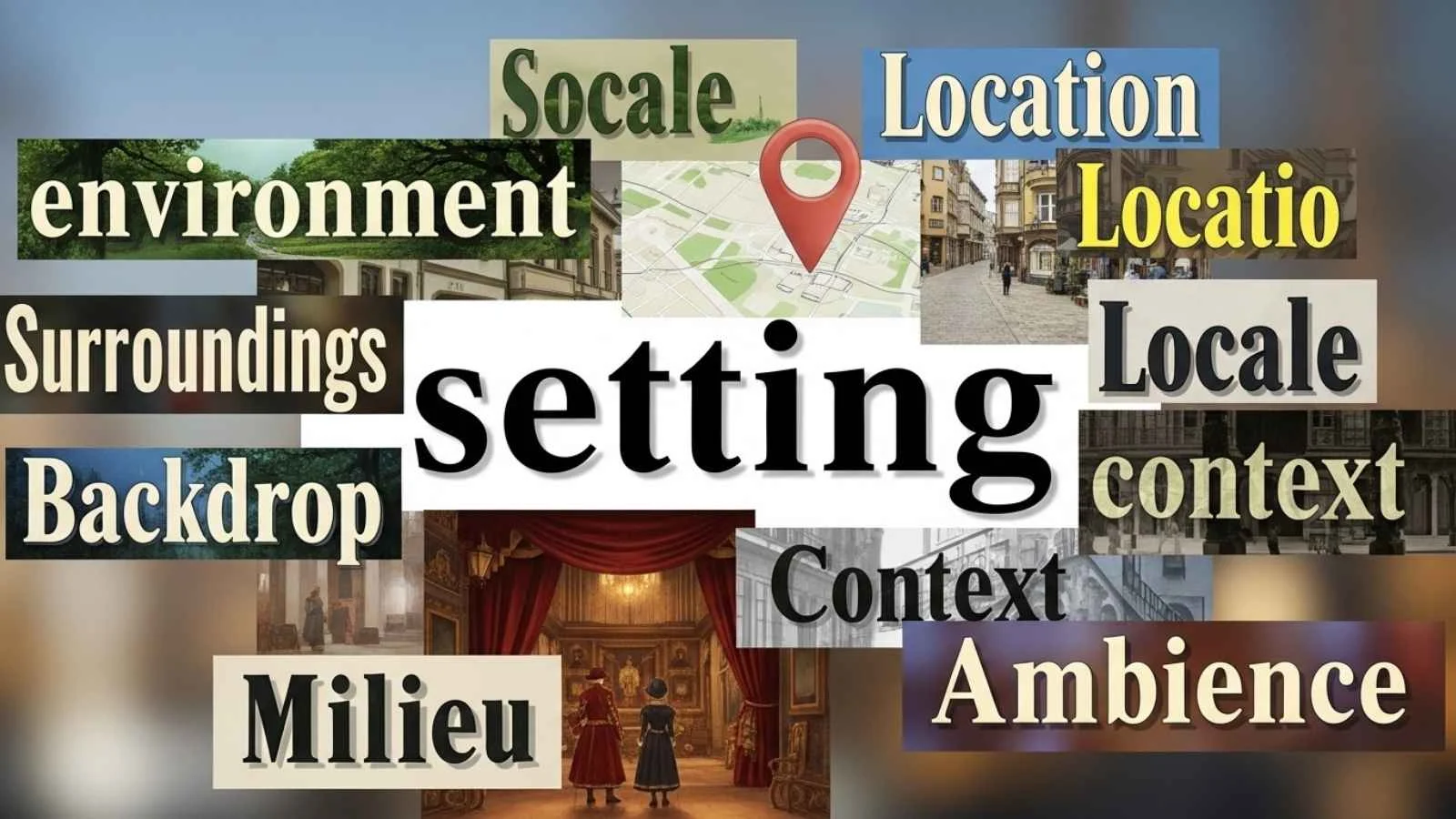
The word setting is used in many ways. We use it for the place in a story, the time of an event, the position of something, or the environment around us. For example, a story can have a village setting, and a phone can have brightness settings.
That is why many people search for synonyms of setting. They want simple and useful words for school, writing, blogs, and daily English. Using different words can make writing clearer and less repetitive.
In simple words, setting means the place, condition, background, or arrangement of something. Learning synonyms of setting can help students write better. It can also help bloggers, writers, and English learners use stronger vocabulary.
Below are 50 simple synonyms of setting with easy meanings and examples.
Place
Meaning:
The location of something.
Examples:
The story takes place in a quiet place.
This is a good place for a picnic.
Location
Meaning:
The exact place where something is.
Examples:
The movie was filmed in a mountain location.
Please share your location with me.
Scene
Meaning:
The place where something happens.
Examples:
The beach was a beautiful scene for the story.
Police reached the scene quickly.
Background
Meaning:
The surroundings or general situation.
Examples:
The painting has a dark background.
Her family background shaped her life.
Environment
Meaning:
The area and conditions around something.
Examples:
The school has a friendly environment.
Plants grow well in this environment.
Surroundings
Meaning:
The things and places around someone or something.
Examples:
The hotel has peaceful surroundings.
He looked carefully at his surroundings.
Context
Meaning:
The situation that helps explain something.
Examples:
The word changes meaning in a new context.
You must read the sentence in context.
Situation
Meaning:
The condition or state at a certain time.
Examples:
It was a hard situation for the family.
She stayed calm in that situation.
Condition
Meaning:
The state something is in.
Examples:
The setting was in poor condition.
The room stayed in good condition.
Atmosphere
Meaning:
The feeling of a place.
Examples:
The café has a warm atmosphere.
The story creates a dark atmosphere.
Mood
Meaning:
The feeling created by a place or scene.
Examples:
The forest gave the story a quiet mood.
Soft music changed the mood of the room.
Framework
Meaning:
The basic structure around something.
Examples:
The idea works in a simple framework.
The story is set in a historical framework.
Stage
Meaning:
The place where something happens or is shown.
Examples:
The play’s setting was a small stage town.
He stepped onto the stage with a smile.
Arrangement
Meaning:
The way things are placed or organized.
Examples:
The table arrangement looked neat.
I liked the arrangement of the chairs.
Position
Meaning:
The place where something is put.
Examples:
The lamp stayed in the same position.
Change the position of the screen.
Layout
Meaning:
The way something is designed or placed.
Examples:
The house has a simple layout.
I like the layout of this website.
Design
Meaning:
The plan or style of something.
Examples:
The room has a modern design.
The garden setting has a lovely design.
Locale
Meaning:
The place where something happens, especially in a story.
Examples:
The film uses a village locale.
The book’s locale is very charming.
Site
Meaning:
A place where something exists or happens.
Examples:
This is the site of the old school.
The building site is still busy.
Spot
Meaning:
A particular small place.
Examples:
This is a nice spot for lunch.
The story begins in a quiet spot.
Area
Meaning:
A part of a place or region.
Examples:
The area was calm and green.
This area is perfect for camping.
Region
Meaning:
A large area of land.
Examples:
The story is set in a cold region.
This region gets a lot of rain.
Territory
Meaning:
A particular area or land.
Examples:
The animals guarded their territory.
The story takes place in wild territory.
Zone
Meaning:
An area with a special use or quality.
Examples:
This is a quiet zone.
The school is in a safe zone.
Domain
Meaning:
An area or field where something belongs.
Examples:
This topic belongs to the domain of science.
The setting changed the story’s domain.
Sphere
Meaning:
An area of activity or influence.
Examples:
She works in the public sphere.
The story moves into a new sphere.
Field
Meaning:
A particular area or subject.
Examples:
He is skilled in the field of art.
The setting fits the field of history.
Frame
Meaning:
The structure around an event or story.
Examples:
The writer uses a wartime frame.
This frame helps us understand the plot.
Circumstances
Meaning:
The facts and conditions around something.
Examples:
The event happened in strange circumstances.
She did well in difficult circumstances.
Conditions
Meaning:
The state of the place or situation.
Examples:
The desert has harsh conditions.
The working conditions were good.
Milieu
Meaning:
The social or physical setting around people.
Examples:
The novel has a rich social milieu.
He grew up in a quiet milieu.
Backdrop
Meaning:
The background setting for an event or story.
Examples:
The mountains formed a beautiful backdrop.
The war was the backdrop of the story.
Scenery
Meaning:
The natural views around a place.
Examples:
The scenery was green and peaceful.
We loved the mountain scenery.
Landscape
Meaning:
The visible features of an area.
Examples:
The desert landscape looked amazing.
The story opens in a snowy landscape.
Habitat
Meaning:
The natural home of an animal or plant.
Examples:
The forest is the bird’s habitat.
This wetland is a rich habitat.
Home Ground
Meaning:
The usual place where someone belongs or works.
Examples:
She feels strong on her home ground.
The team played on home ground.
Base
Meaning:
The main place where something starts or works from.
Examples:
The camp became their base.
This city is our base for travel.
Foundation
Meaning:
The main support or basis of something.
Examples:
Trust is the foundation of friendship.
The setting gives the story its foundation.
Setting
Meaning:
The place, time, or conditions where something happens.
Examples:
The story has a school setting.
This phone has many useful settings.
Tone
Meaning:
The general feeling or style.
Examples:
The room has a calm tone.
The setting gives the story a dark tone.
Climate
Meaning:
The general feeling or weather condition.
Examples:
The area has a dry climate.
There is a climate of fear in the story.
Outlook
Meaning:
The general view or feeling of a situation.
Examples:
The business outlook looks good.
The social outlook shaped the setting.
Order
Meaning:
The arranged state of things.
Examples:
The room was in perfect order.
Keep the desk in order.
Placement
Meaning:
The way something is placed.
Examples:
The placement of the chairs looks fine.
Picture placement matters in design.
Composition
Meaning:
The way parts are arranged together.
Examples:
The photo has a lovely composition.
The setting has a balanced composition.
Structure
Meaning:
The way something is built or arranged.
Examples:
The structure of the story is simple.
The room’s structure feels open.
Scheme
Meaning:
A planned arrangement or system.
Examples:
The color scheme is soft and warm.
The seating scheme worked well.
Configuration
Meaning:
The way parts are set up.
Examples:
The computer configuration is easy to change.
We liked the room configuration.
Setup
Meaning:
The arrangement or organization of something.
Examples:
The setup of the hall was neat.
The game has a simple setup.
Setting for the Story
Meaning:
The place and time of a story.
Examples:
The setting for the story is a small town.
I loved the setting for the story.
Conclusion
Learning synonyms for setting can be useful in essays, stories, blogs, and everyday English.
Students can use these words in their schoolwork. Writers and bloggers can use them in articles and creative writing. You can also use them in everyday speech when discussing place, mood, or arrangement.
Practice these words often, and your vocabulary will grow stronger.

I am an English language writer who specializes in synonyms and vocabulary. I create simple and clear content to help readers understand word meanings and improve their writing. My work focuses on making language easy for everyone.