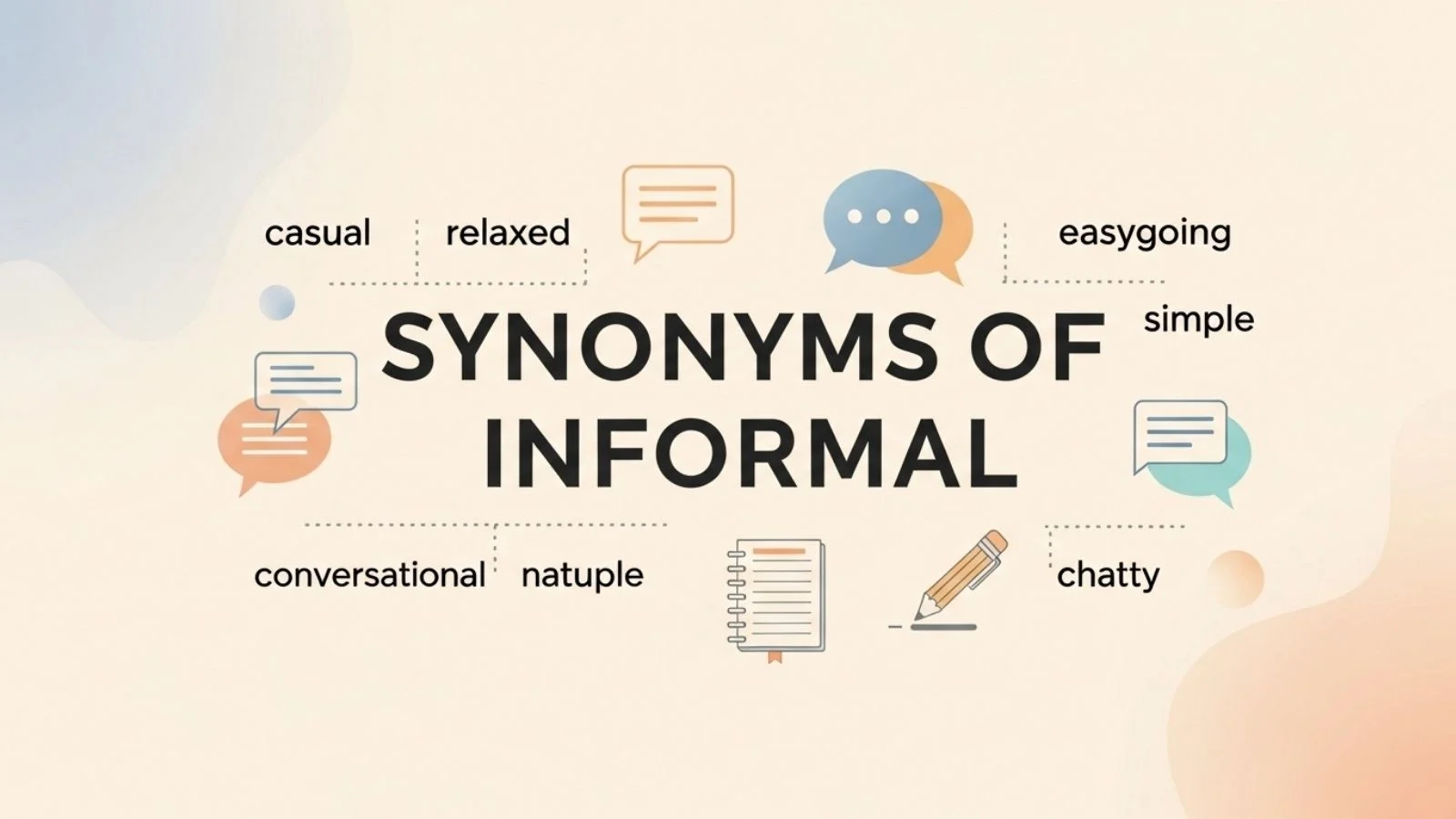
Have you ever talked to a friend in a relaxed and easy way? Maybe you used simple words, jokes, or short sentences. This kind of speaking is called informal.
It is useful in writing, speaking, and daily conversations.
In simple words, informal means relaxed, friendly, and not strict or official. Learning synonyms of informal helps students write better. It also helps bloggers, writers, and English learners use natural and easy words.
Below are 50 easy synonyms of informal with simple meanings and examples.
Casual
Meaning:
Relaxed and not formal.
Examples:
He wore casual clothes.
We had a casual talk.
Relaxed
Meaning:
Calm and easy.
Examples:
She felt relaxed at home.
The meeting was relaxed.
Friendly
Meaning:
Kind and easy to talk to.
Examples:
He is very friendly.
She gave a friendly smile.
Easygoing
Meaning:
Calm and not strict.
Examples:
He is easygoing.
She has an easygoing nature.
Unofficial
Meaning:
Not official or formal.
Examples:
This is an unofficial meeting.
He made an unofficial plan.
Natural
Meaning:
Simple and normal.
Examples:
She spoke in a natural way.
His style is natural.
Simple
Meaning:
Not complex or formal.
Examples:
He used simple words.
The talk was simple.
Unplanned
Meaning:
Not planned before.
Examples:
It was an unplanned meeting.
They had an unplanned chat.
Spontaneous
Meaning:
Done without planning.
Examples:
It was a spontaneous idea.
She made a spontaneous plan.
Light
Meaning:
Easy and not serious.
Examples:
We had a light conversation.
The mood was light.
Easy
Meaning:
Not difficult or strict.
Examples:
The rules are easy.
She kept things easy.
Open
Meaning:
Free and honest.
Examples:
They had an open talk.
She is open with friends.
Free
Meaning:
Not controlled or strict.
Examples:
The style is free.
He spoke in a free way.
Loose
Meaning:
Not tight or strict.
Examples:
The rules are loose.
He kept a loose style.
Chill
Meaning:
Calm and relaxed.
Examples:
He is very chill.
The party was chill.
Laid-back
Meaning:
Very relaxed and calm.
Examples:
He has a laid-back style.
She is laid-back.
Cool
Meaning:
Relaxed and easy.
Examples:
He is cool with it.
She stayed cool.
Everyday
Meaning:
Used in daily life.
Examples:
He used everyday words.
She likes everyday language.
Common
Meaning:
Used by many people.
Examples:
This is a common style.
He used common words.
Conversational
Meaning:
Like normal talking.
Examples:
She used a conversational tone.
The style is conversational.
Chatty
Meaning:
Talking in a friendly way.
Examples:
He is chatty.
She had a chatty mood.
Warm
Meaning:
Friendly and kind.
Examples:
She gave a warm reply.
He spoke in a warm tone.
Personal
Meaning:
Close and private.
Examples:
It was a personal talk.
She shared personal ideas.
Home-style
Meaning:
Simple and like home.
Examples:
The talk was home-style.
She used home-style words.
Unpolished
Meaning:
Not perfect or formal.
Examples:
His speech was unpolished.
She gave an unpolished reply.
Rough
Meaning:
Not smooth or formal.
Examples:
He gave a rough answer.
The talk was rough.
Plain
Meaning:
Simple and clear.
Examples:
She used plain language.
He gave a plain answer.
Direct
Meaning:
Straight and simple.
Examples:
He was direct.
She gave a direct reply.
Honest
Meaning:
Truthful and open.
Examples:
He was honest.
She gave an honest answer.
Easy Speech
Meaning:
Simple way of speaking.
Examples:
He used easy speech.
She spoke in an easy speech.
Relaxed Style
Meaning:
A calm way of speaking or writing.
Examples:
He has a relaxed style.
She used a relaxed style.
Friendly Tone
Meaning:
A kind way of speaking.
Examples:
He used a friendly tone.
She spoke in a friendly tone.
Simple Talk
Meaning:
Easy and clear speaking.
Examples:
He used simple talk.
She likes simple talk.
Casual Talk
Meaning:
Relaxed conversation.
Examples:
They had a casual talk.
He enjoys casual talk.
Easy Language
Meaning:
Simple words.
Examples:
He used easy language.
She prefers easy language.
Light Talk
Meaning:
Not a serious conversation.
Examples:
They had light talk.
She likes light talk.
Daily Language
Meaning:
Words used every day.
Examples:
He used daily language.
She speaks a daily language.
Open Talk
Meaning:
Free and honest talk.
Examples:
They had an open talk.
She likes open talk.
Free Style
Meaning:
Not strict or fixed.
Examples:
He used free-style writing.
She likes free style.
Easy Tone
Meaning:
A relaxed way of speaking.
Examples:
He spoke in an easy tone.
She used an easy tone.
Relaxed Talk
Meaning:
Calm and simple talk.
Examples:
They had a relaxed talk.
She enjoys relaxed talk.
Chat Style
Meaning:
Like normal chatting.
Examples:
He used a chat style.
She writes in chat style.
Friendly Chat
Meaning:
Kind and easy conversation.
Examples:
They had a friendly chat.
She enjoys friendly chat.
Informal Style
Meaning:
A relaxed way of speaking.
Examples:
He used an informal style.
She likes an informal style.
Simple Style
Meaning:
An easy and clear way of writing.
Examples:
He used a simple style.
She prefers a simple style.
Natural Talk
Meaning:
Normal and easy conversation.
Examples:
They had a natural conversation.
She enjoys natural talk.
Easy Chat
Meaning:
Simple and relaxed talk.
Examples:
They had an easy chat.
She likes easy chats.
Free Talk
Meaning:
Open and relaxed conversation.
Examples:
They had a free talk.
She enjoys free talk.
Casual Style
Meaning:
Relaxed way of writing or speaking.
Examples:
He uses a casual style.
She prefers a casual style.
Relaxed Language
Meaning:
Easy and simple words.
Examples:
He used relaxed language.
She likes relaxed language.
Conclusion
Learning synonyms of informal helps you speak and write in many different ways. It allows you to choose the right tone, whether you want to sound friendly, relaxed, or simple.
Students can use these words in essays. Bloggers and writers can improve their content. You can also use them in daily conversations.
Practice these words often, and your English will become more natural and clear.

I am a language enthusiast and content writer. I specialize in English vocabulary and synonyms. I create clear and simple articles that help readers understand word meanings and choose the right words in everyday writing.